Code: Blackbeak - Stealth
Summery
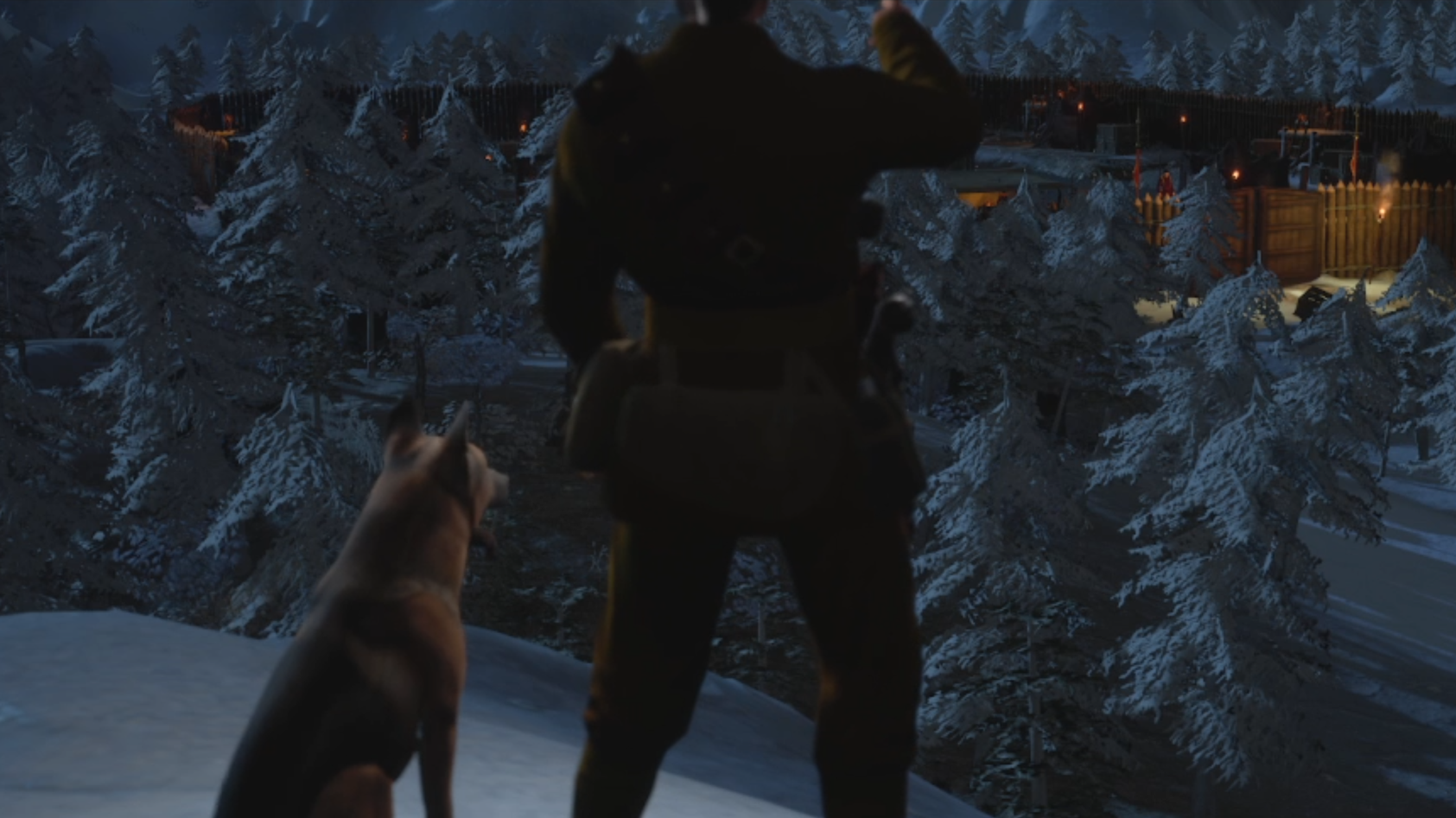
In this project, which took us 8 months to complete. I created two levels in which the player controls a dog accompanied by its handler.
Both levels are open spaces that let the player move freely, and instead of relying on UI waypoints, I guide the player through level design techniques.
Both levels are built around stealth, but if sneaking fails, the player can also fight their way through, allowing them to recover from mistakes without restarting.
Breakdown
Unreal Engine 4
Trello
Miro
Unity DevOps
Responsibility
Level design
Game design
Scripting
Lighting
Gameplay
In the No Man’s Land level, the player must cross a dangerous open area filled with mines while avoiding enemy sightlines. After reaching the base, the player has to sneak inside, locate important documents, and escape without being detected.
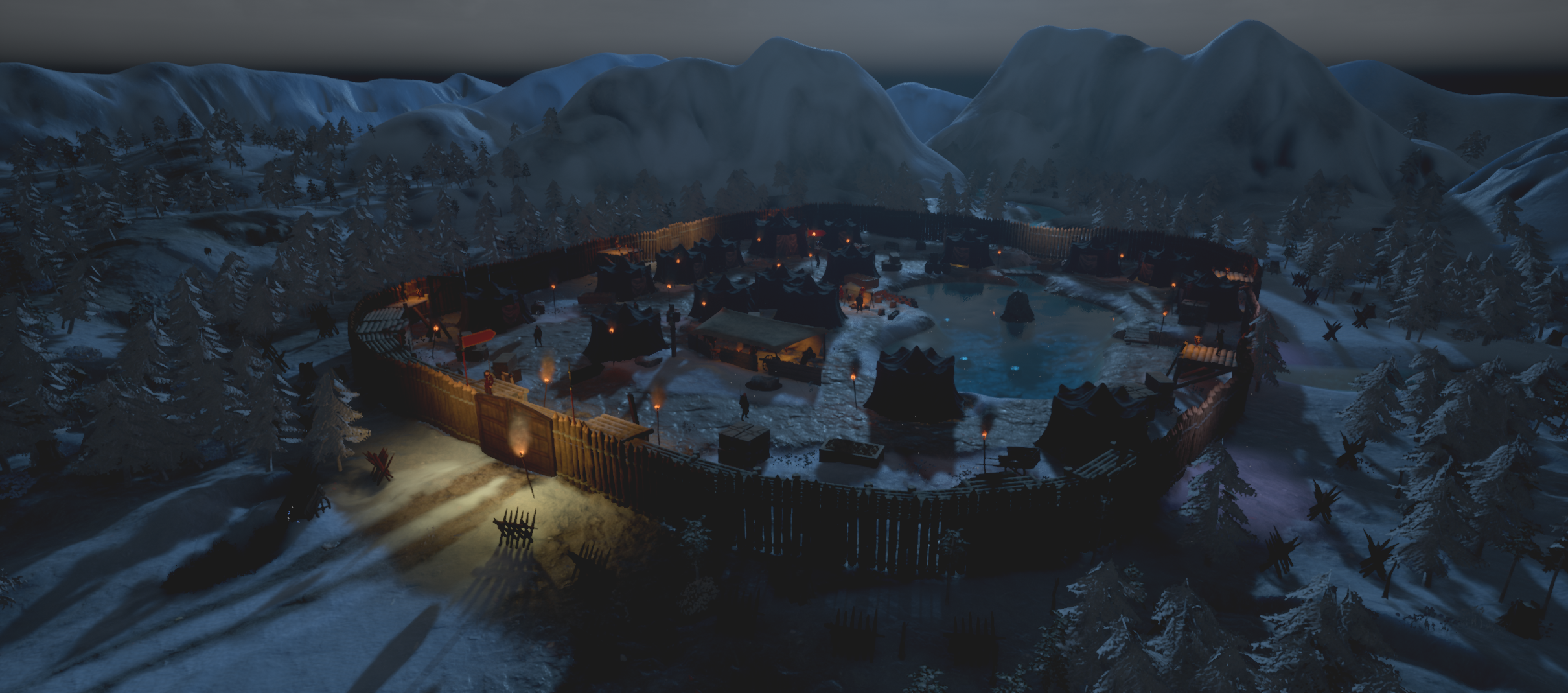
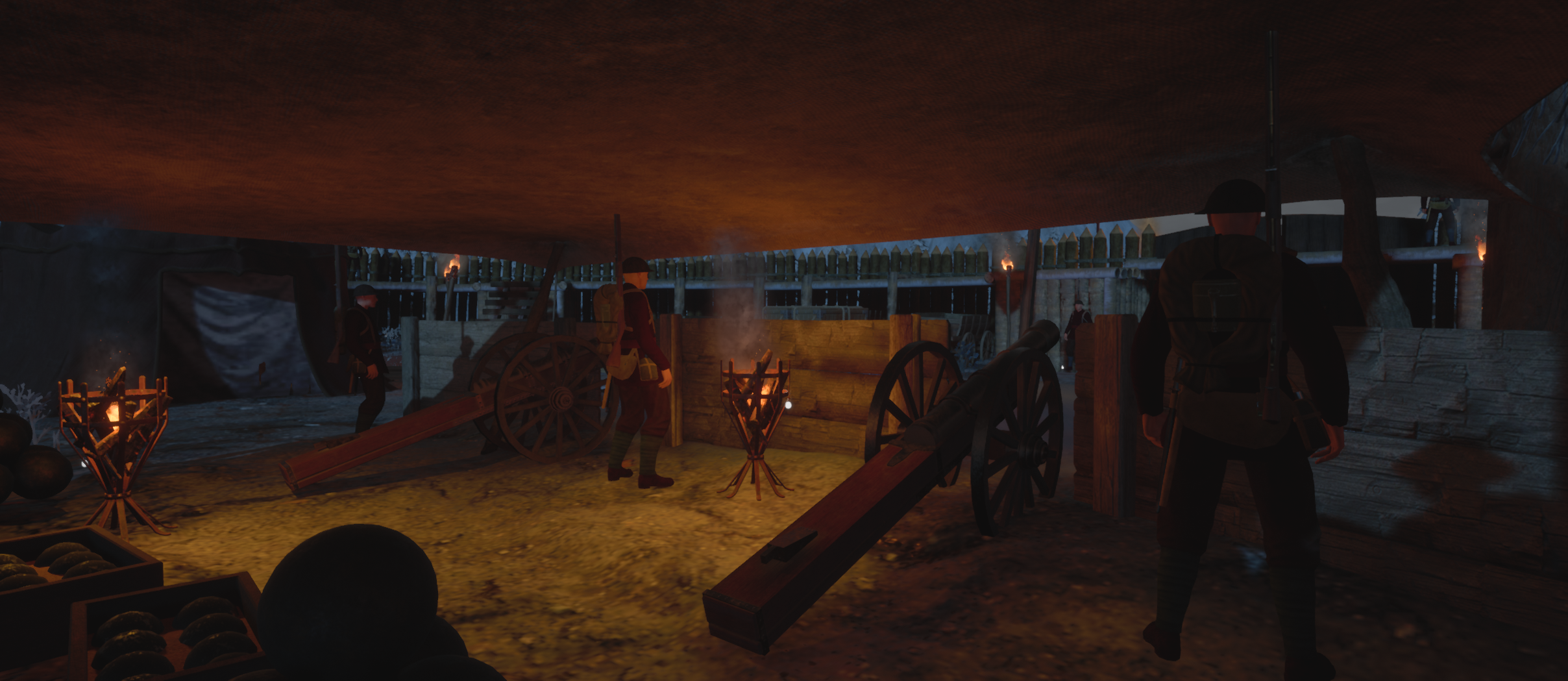
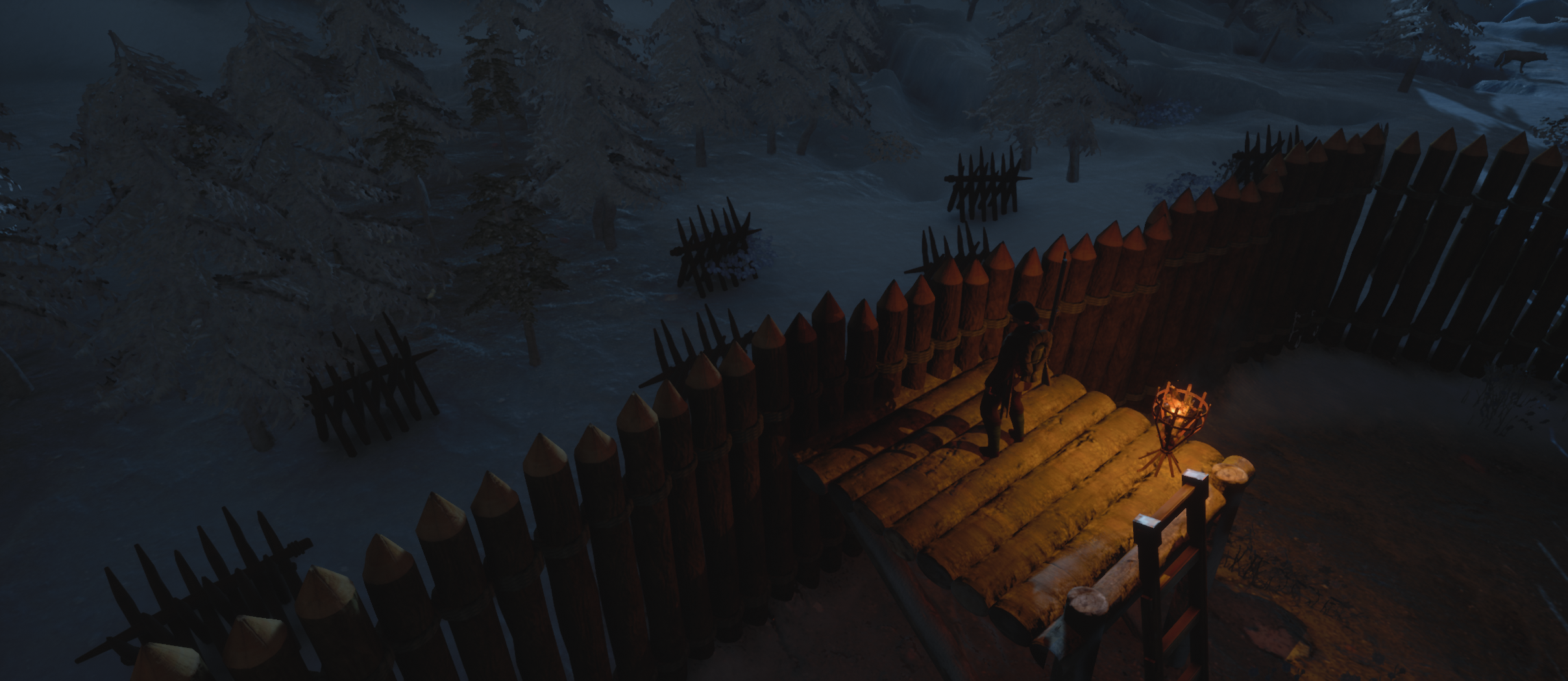
In the Enemy Camp level, the player first needs to reach the camp and then open an escape route for the handler. Only after reuniting with the handler can the player take out the guards at the gate and allow the rest of the allied forces to enter.
No Man’s Land level
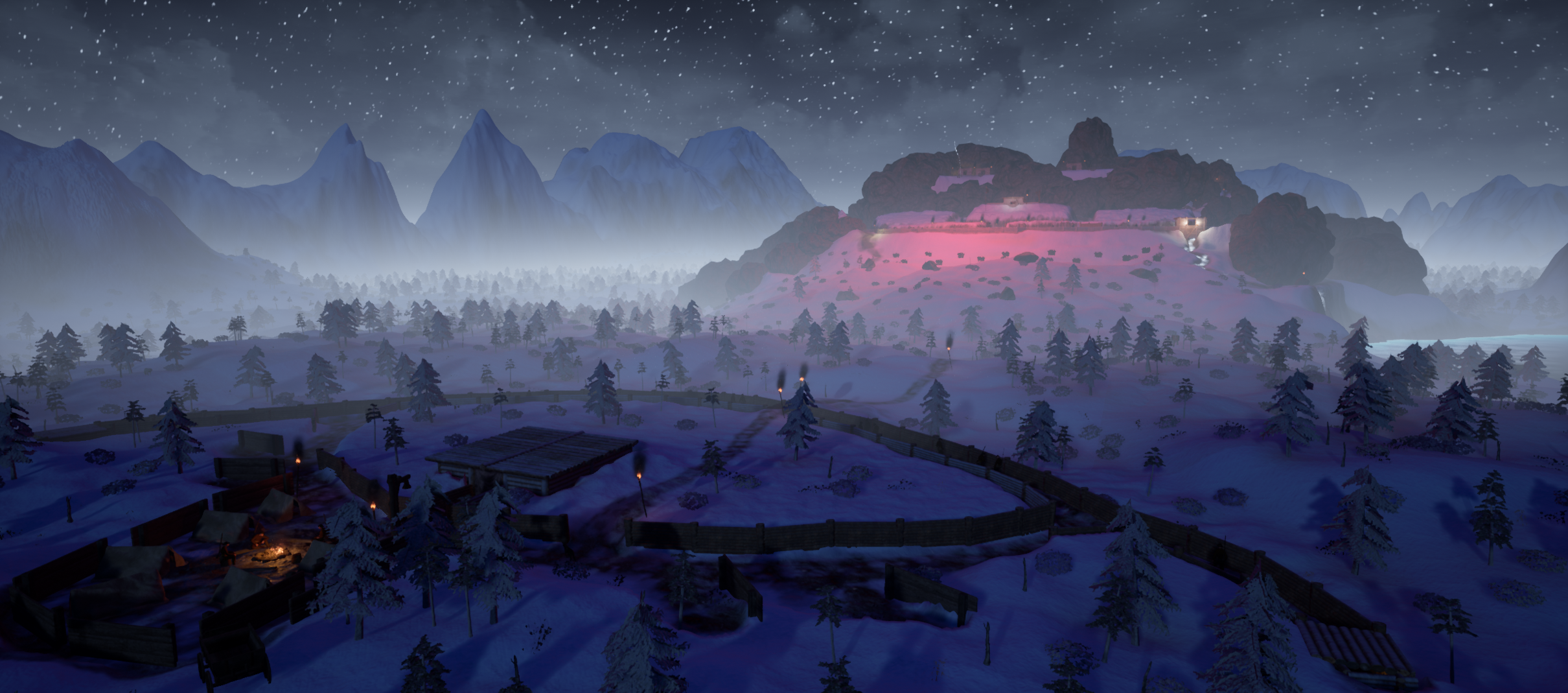
No Man's Land level
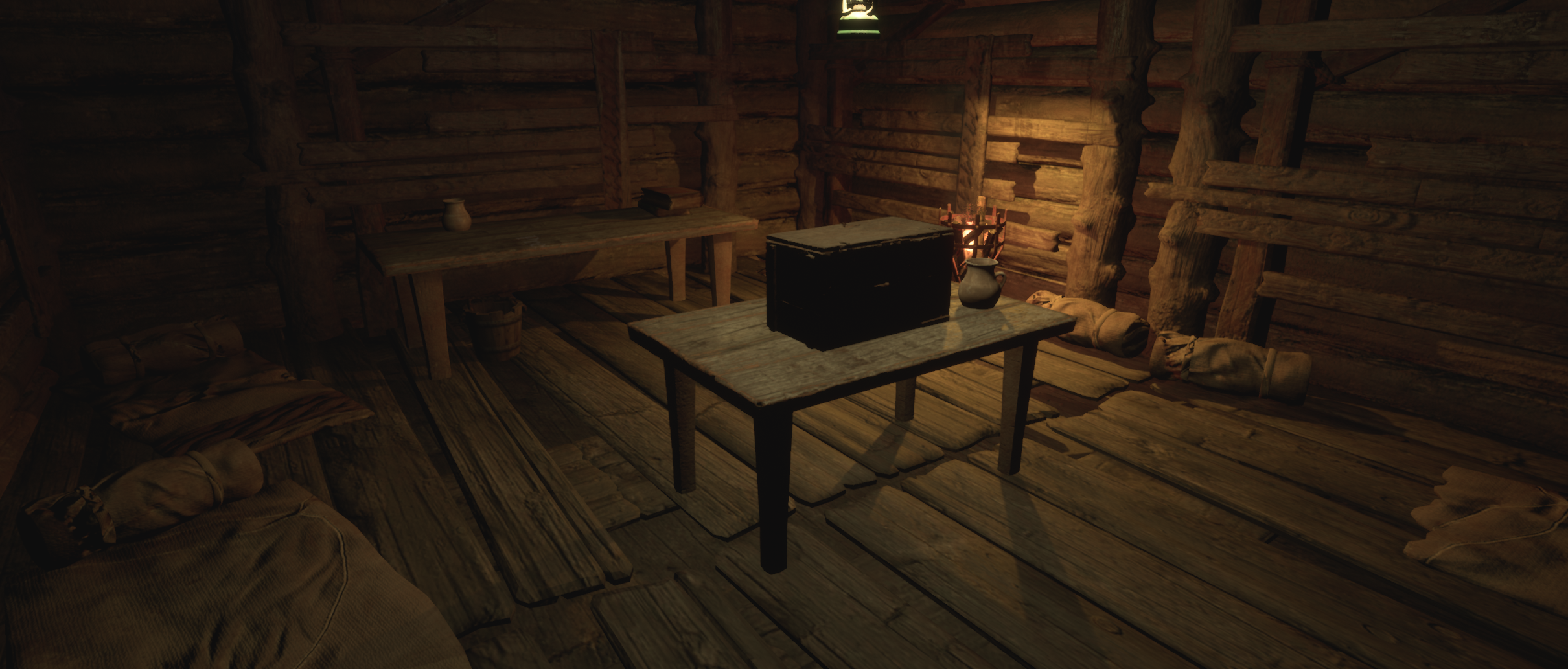
Main objective
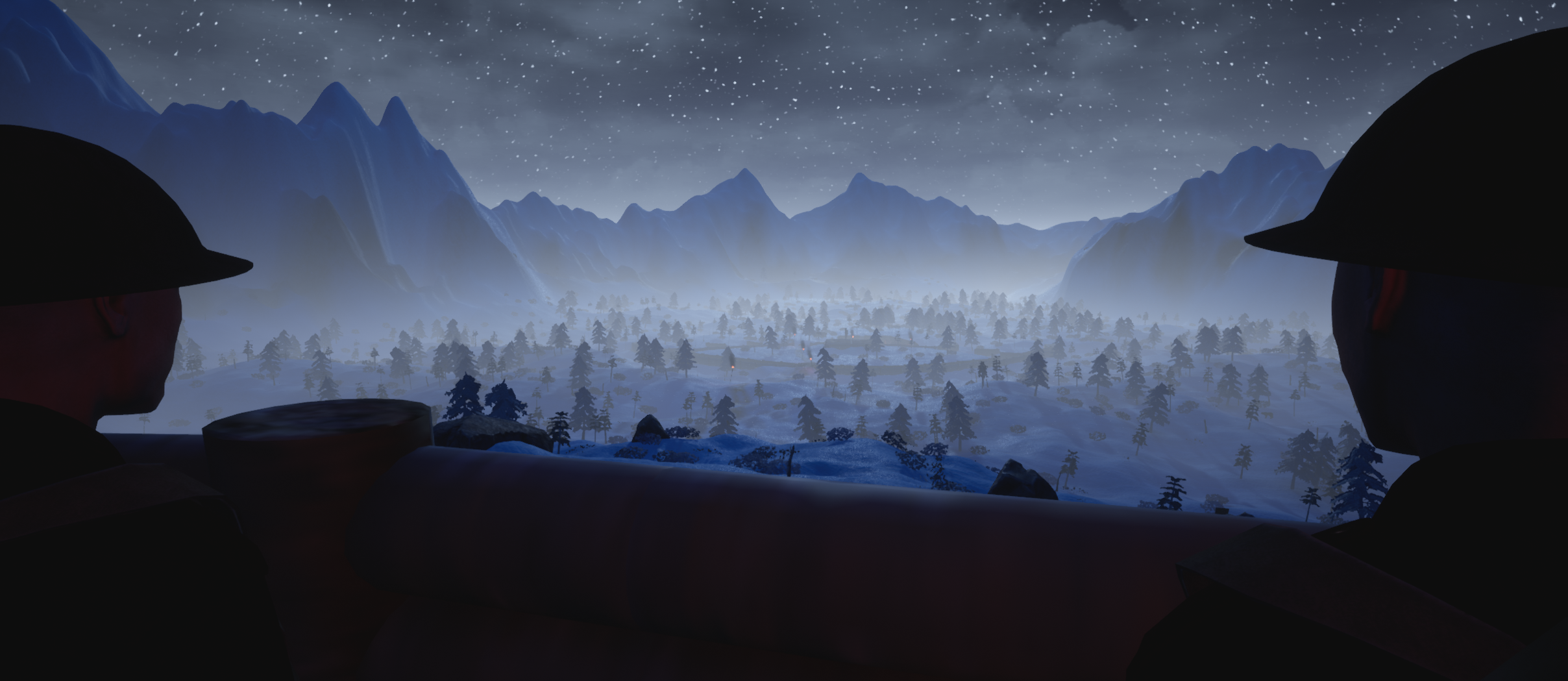
View of out of enemy camp
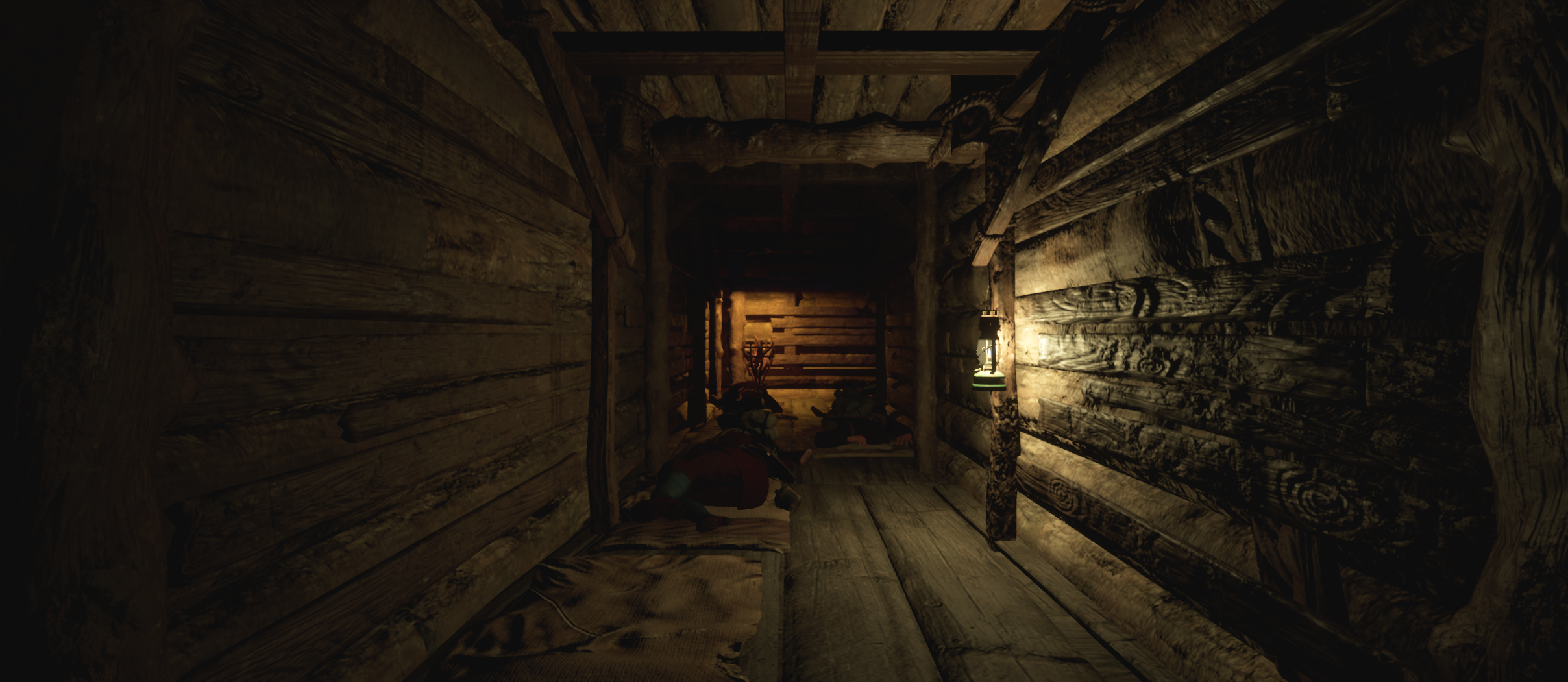
Tunnels
Level Flowchart
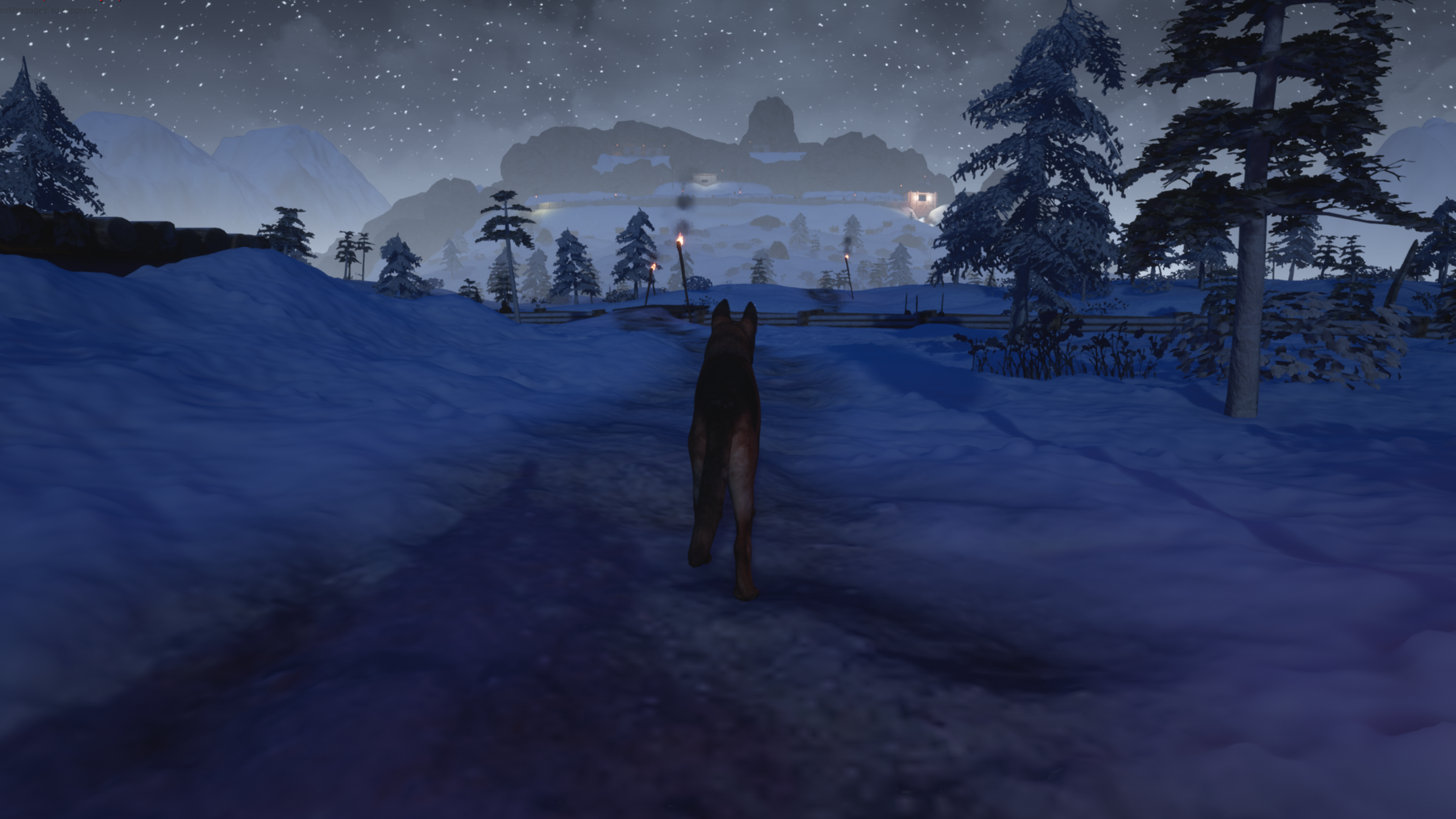
1. The player starts in the trenches.
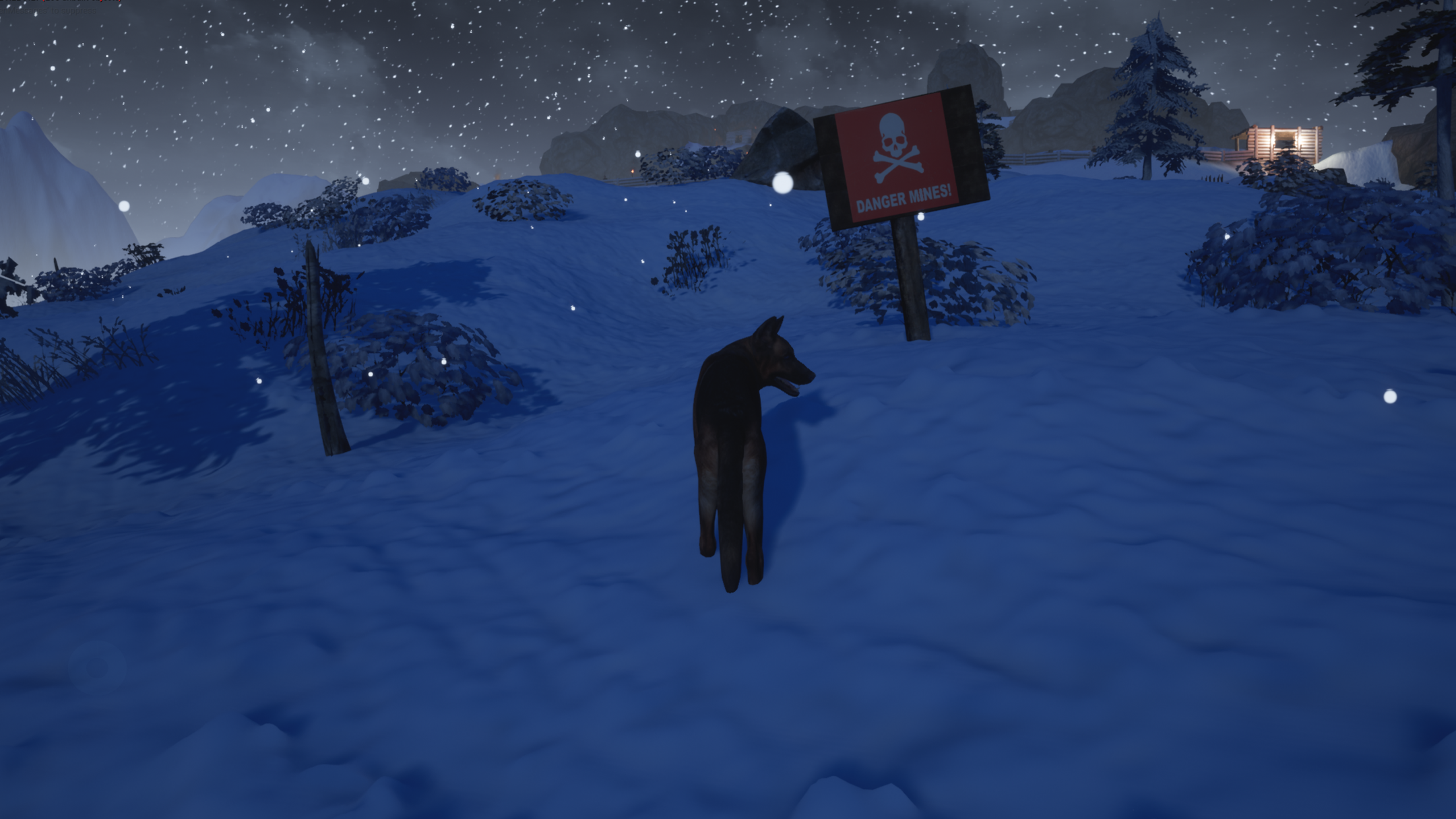
2. Overcome the minefield.
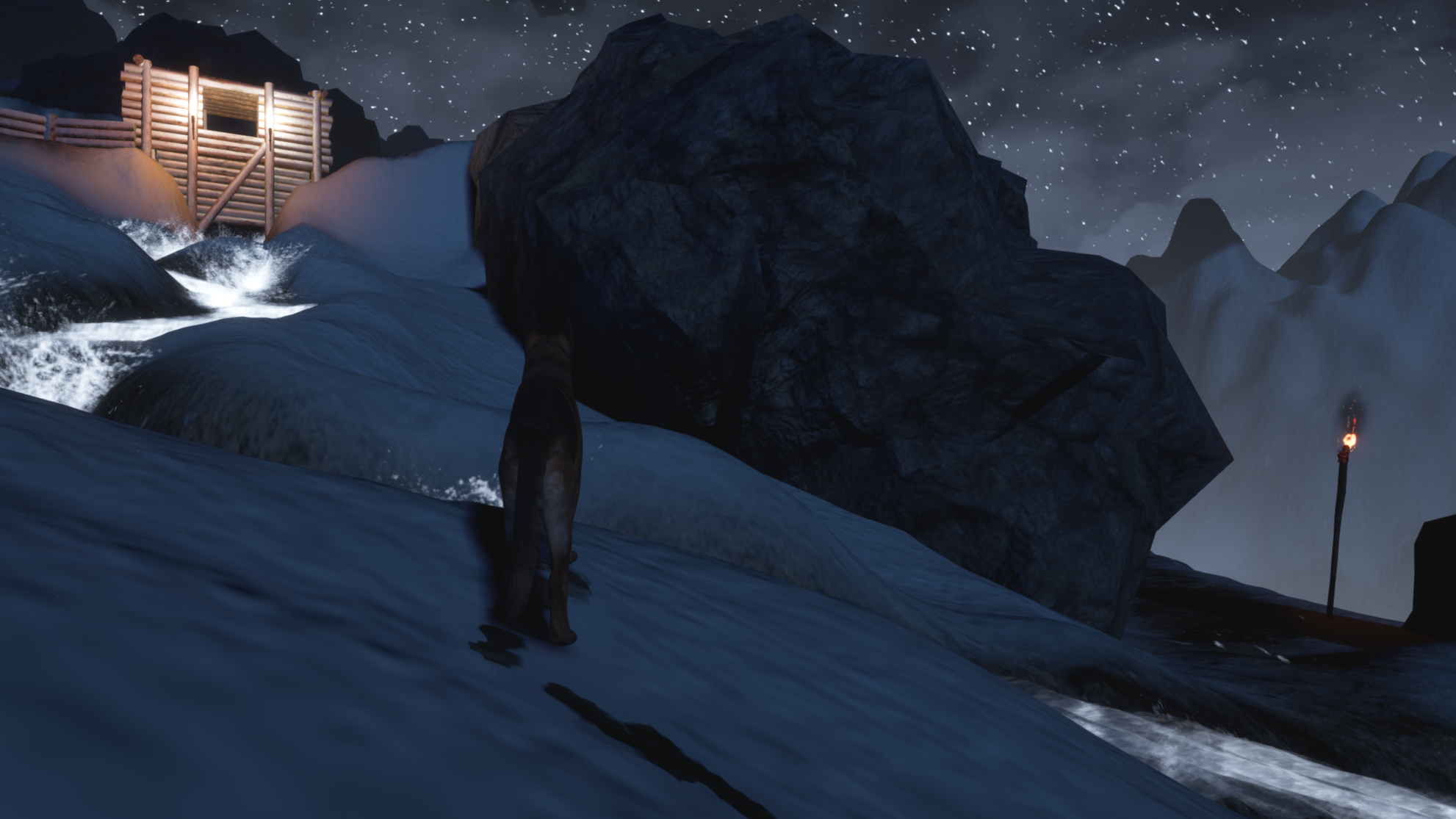
3. Get into the enemy camp.
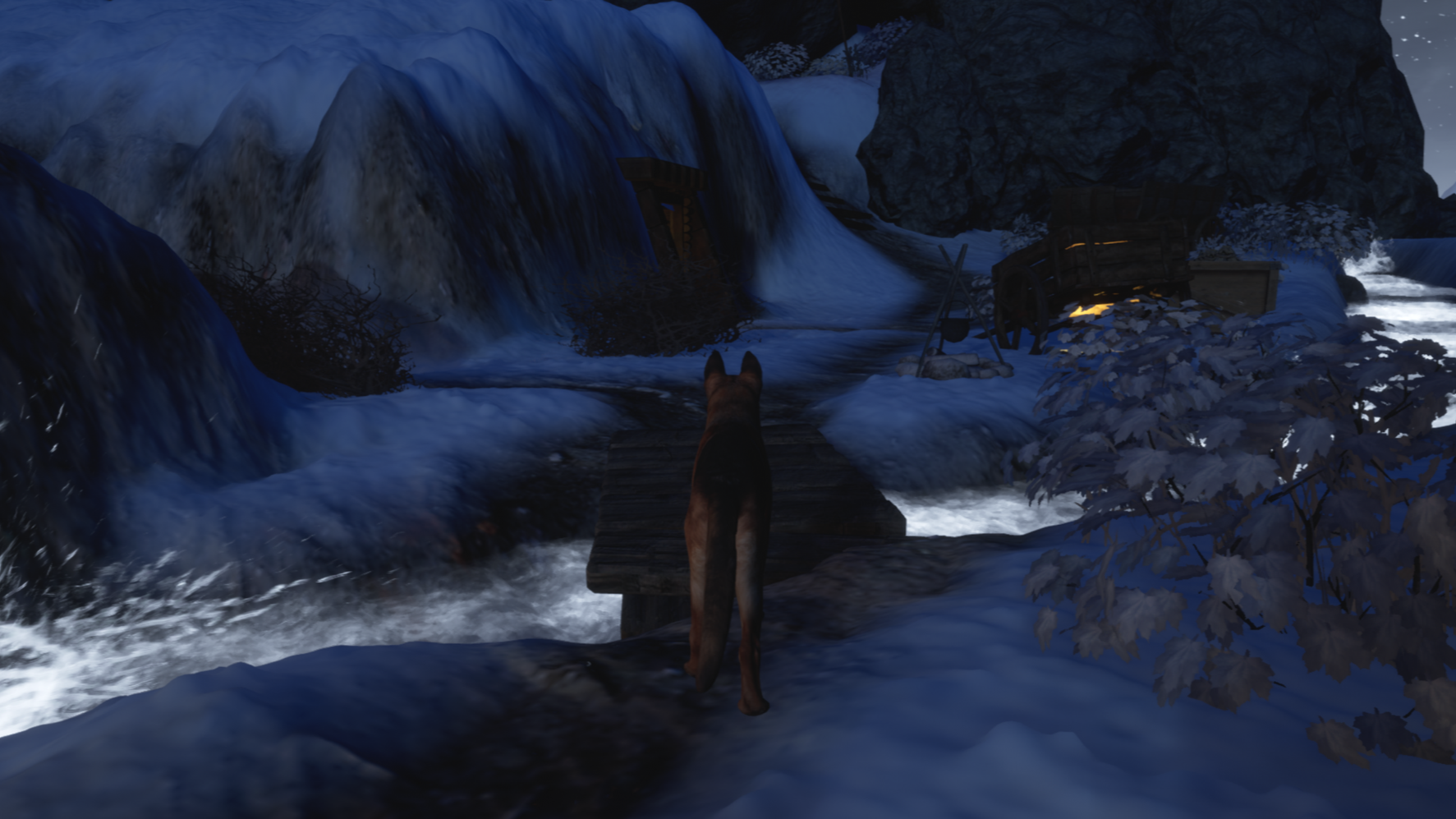
4. Sneak/fight through the camp.
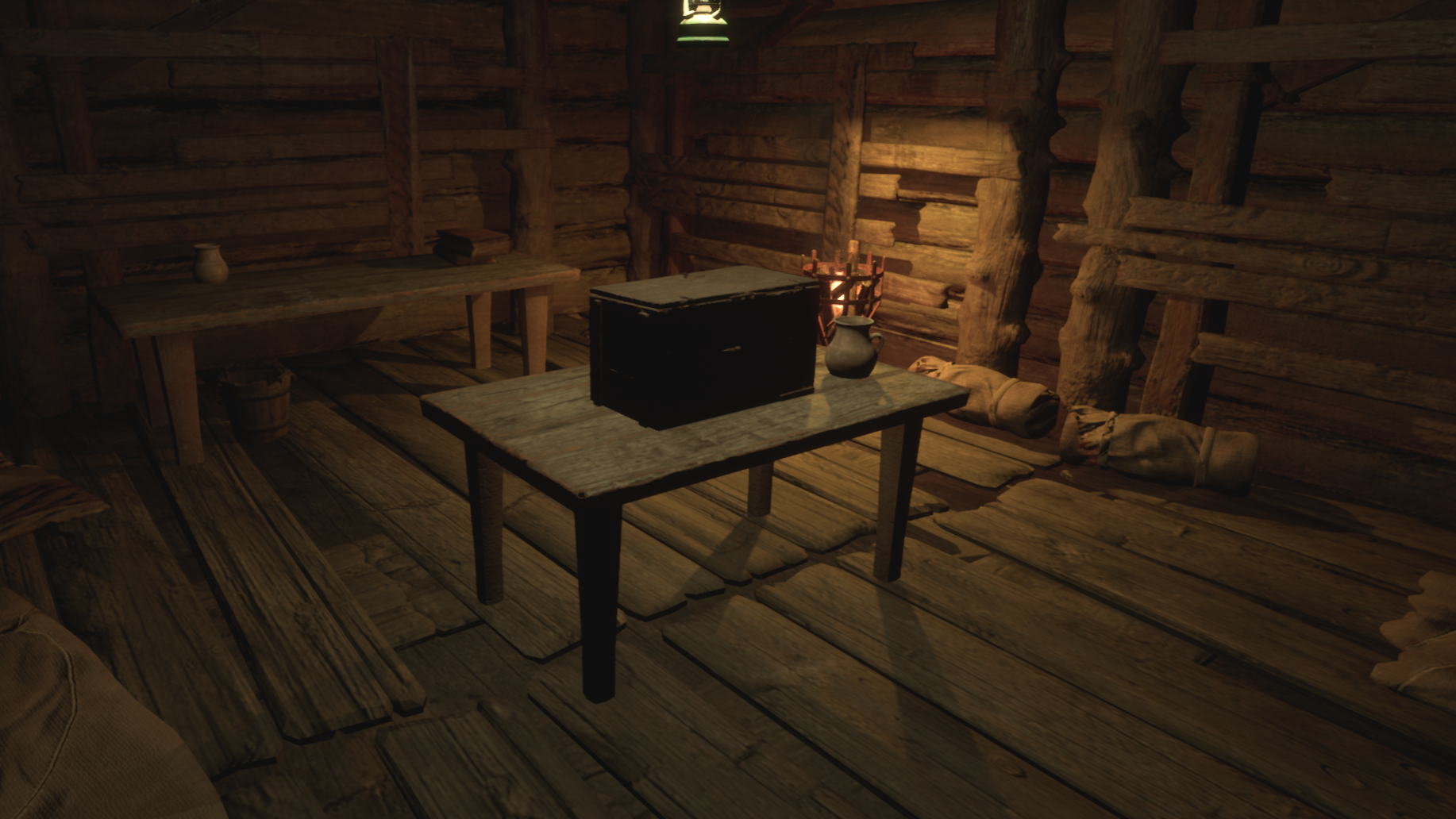
5. Get the parchment.
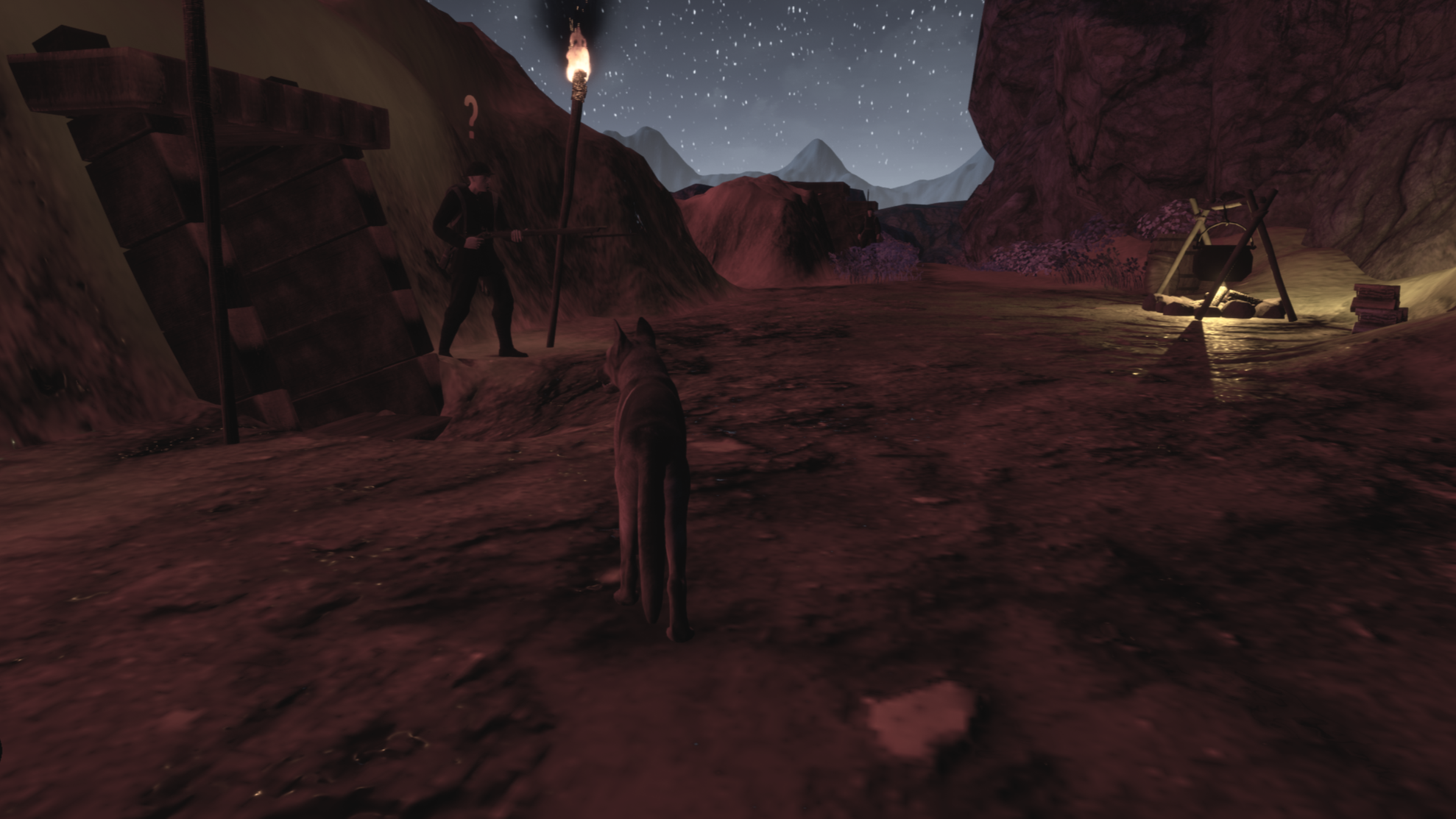
6. Sneak/fight out of the camp.
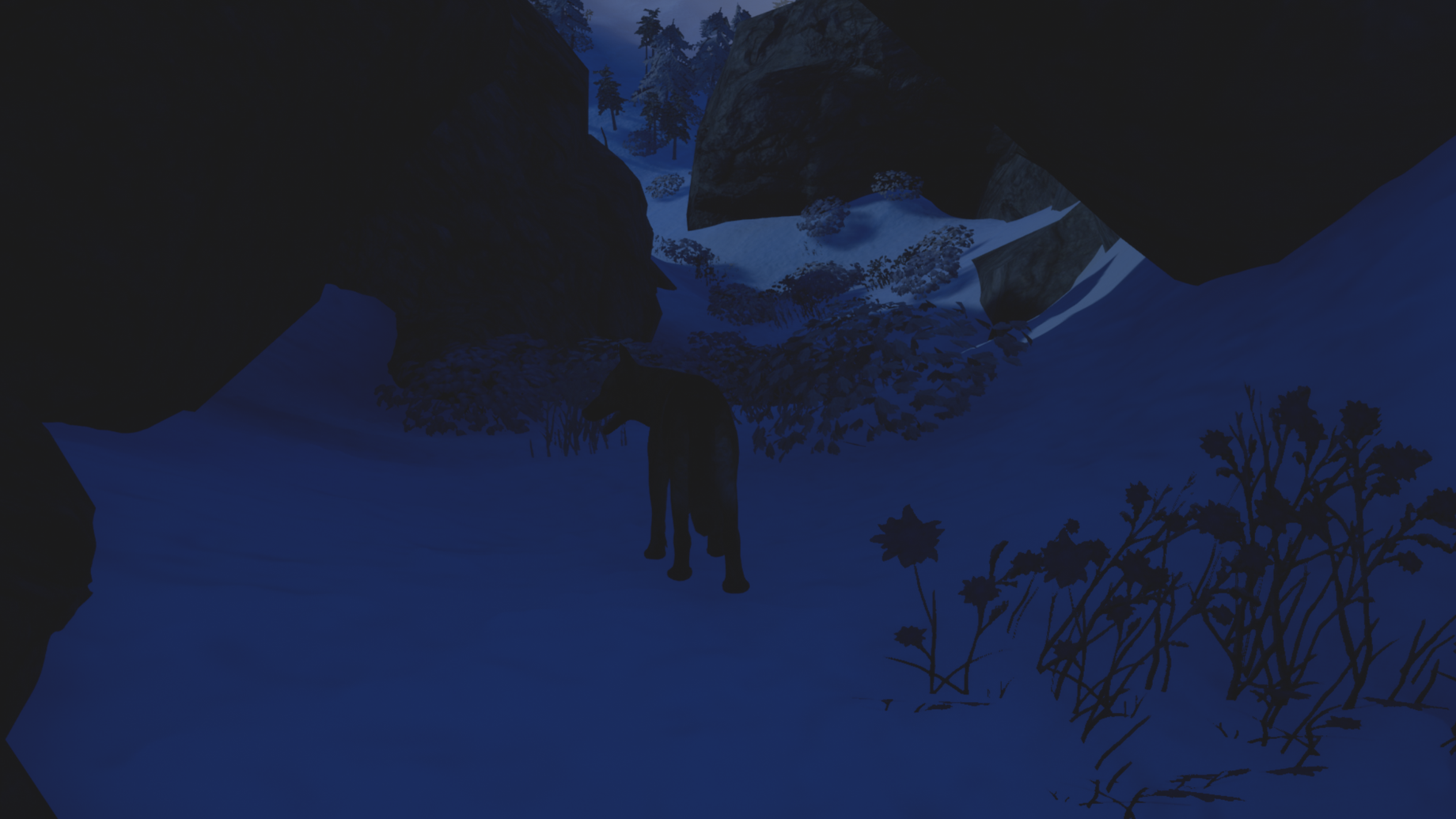
7. Slide out of the camp.
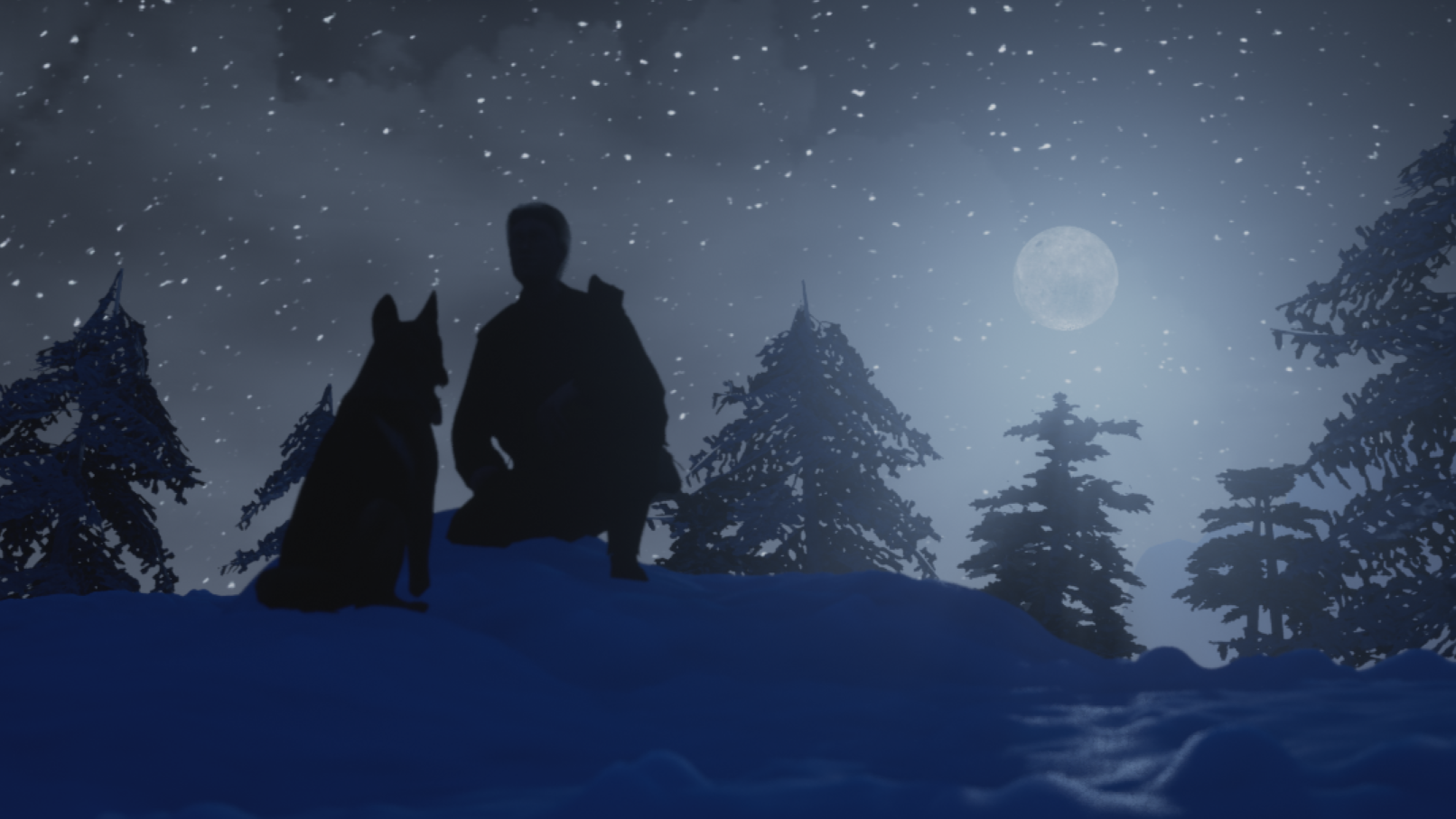
8. Meet up with your handler.
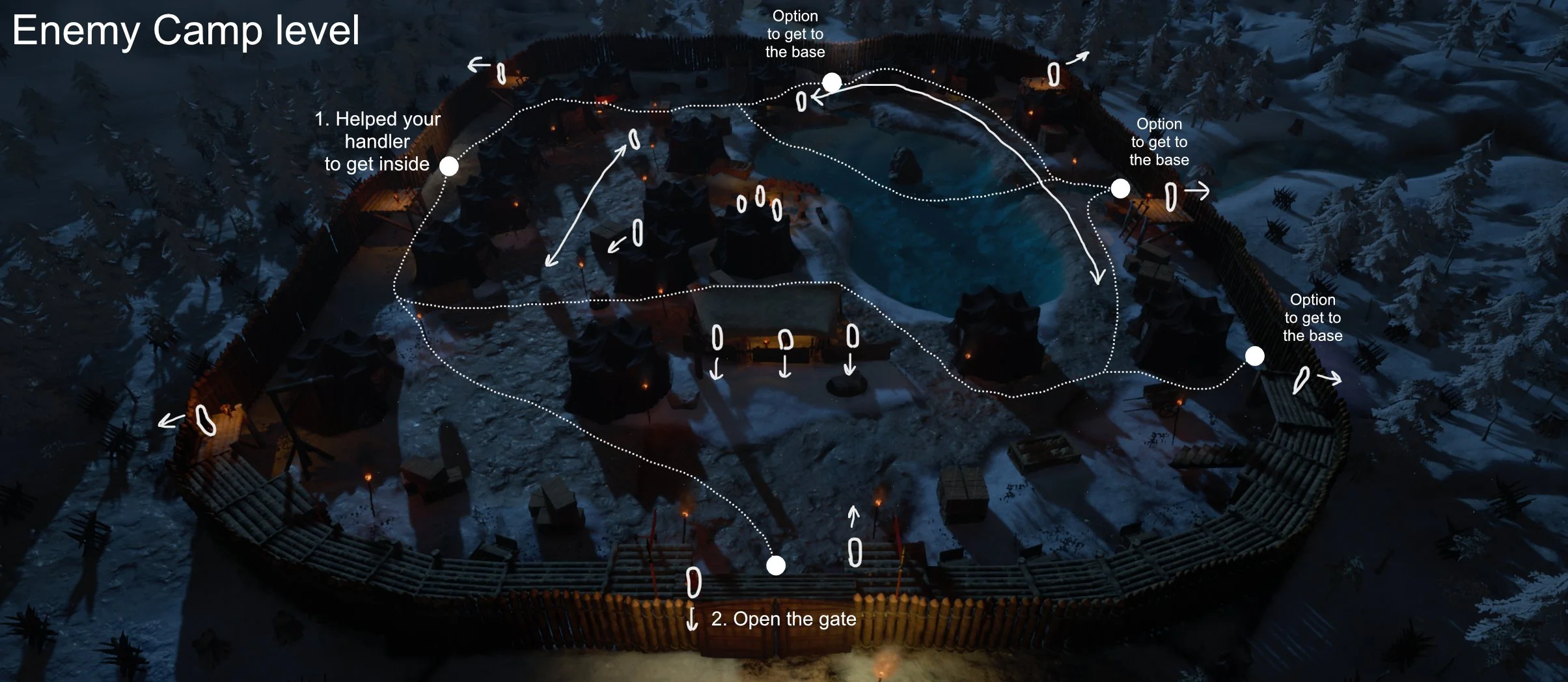
Enemy Camp level
Level Flowchart
1. The player sees the objectives.
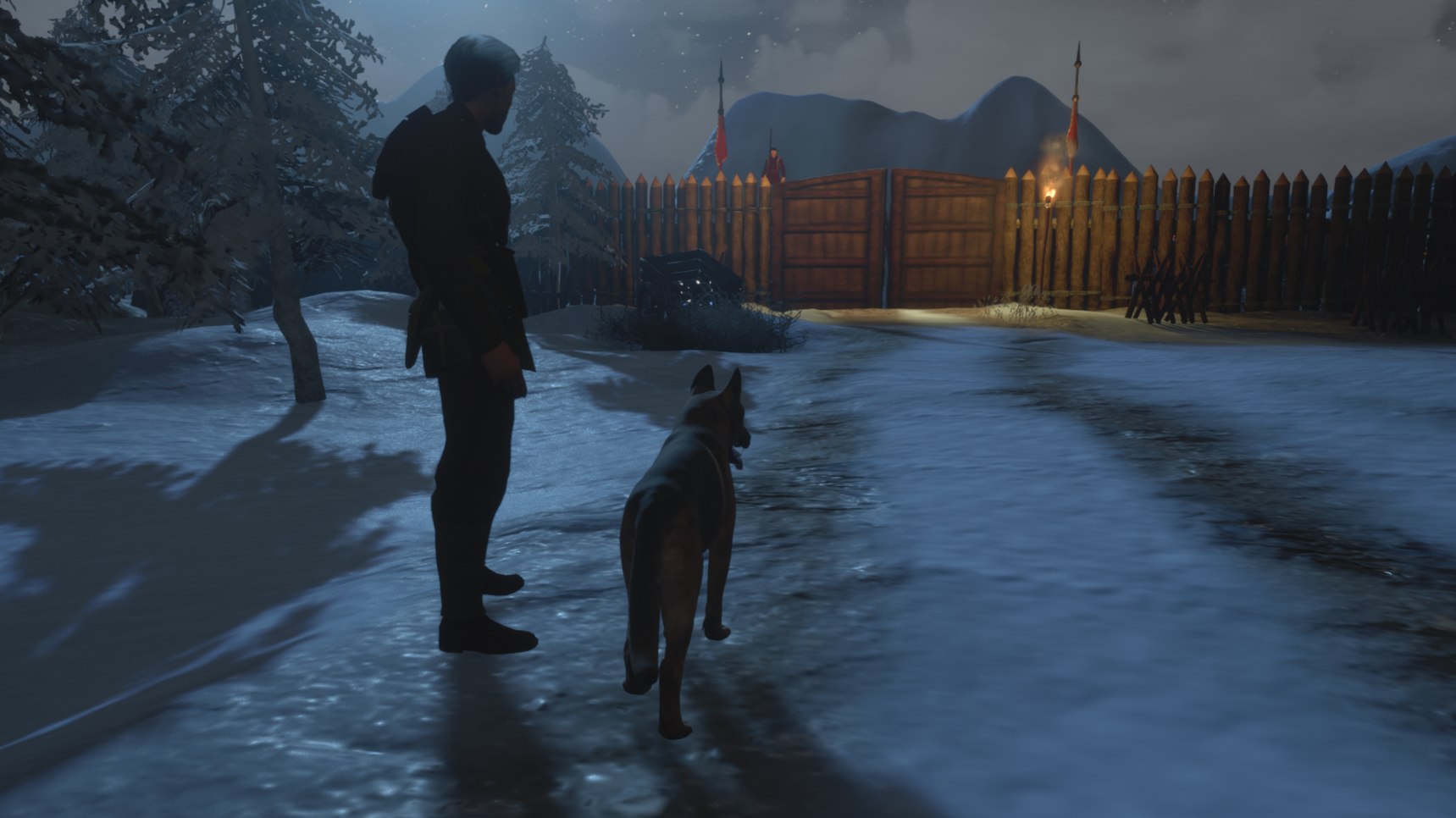
2. Open the main gate.
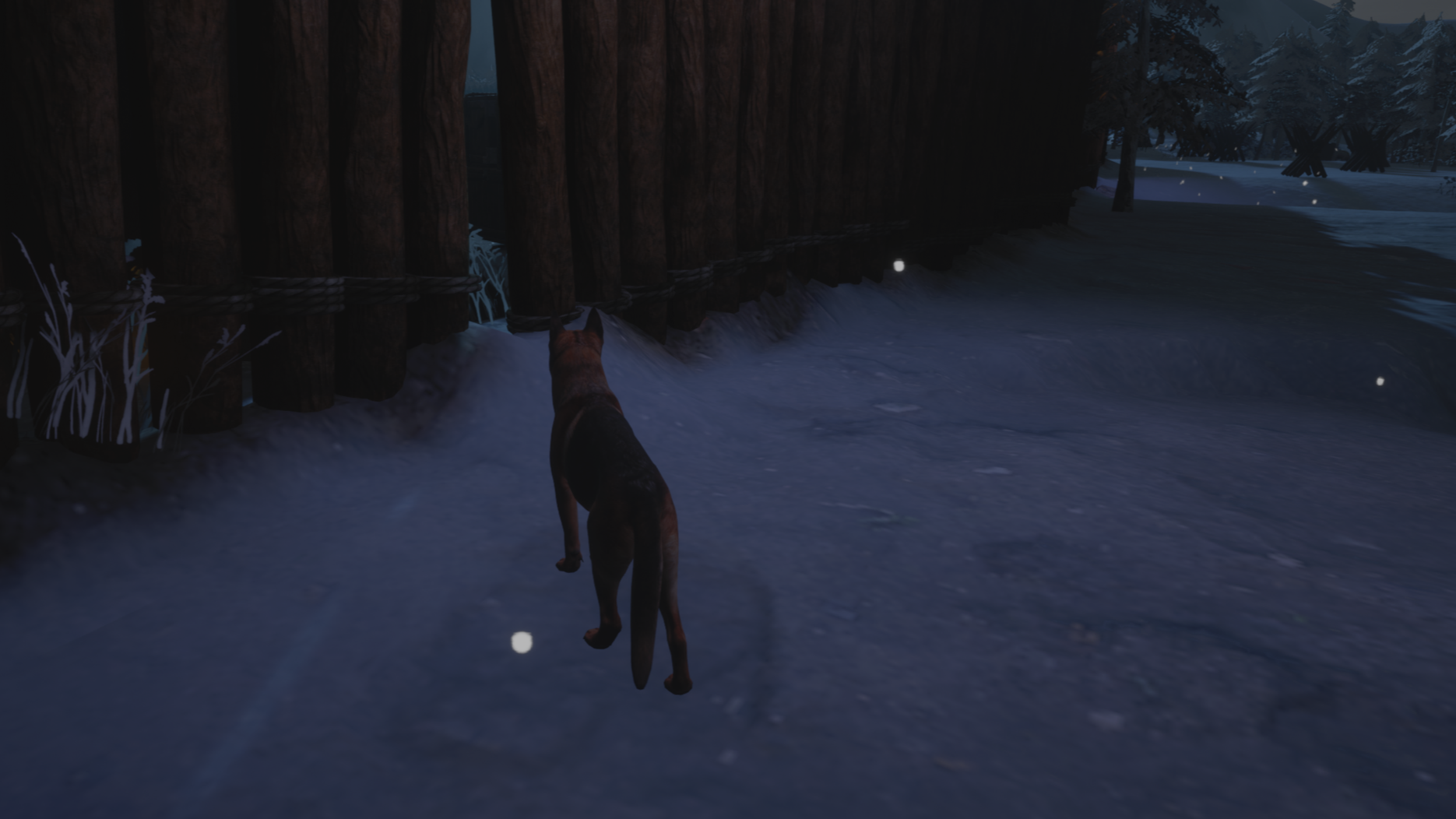
3. Find the way to the camp.
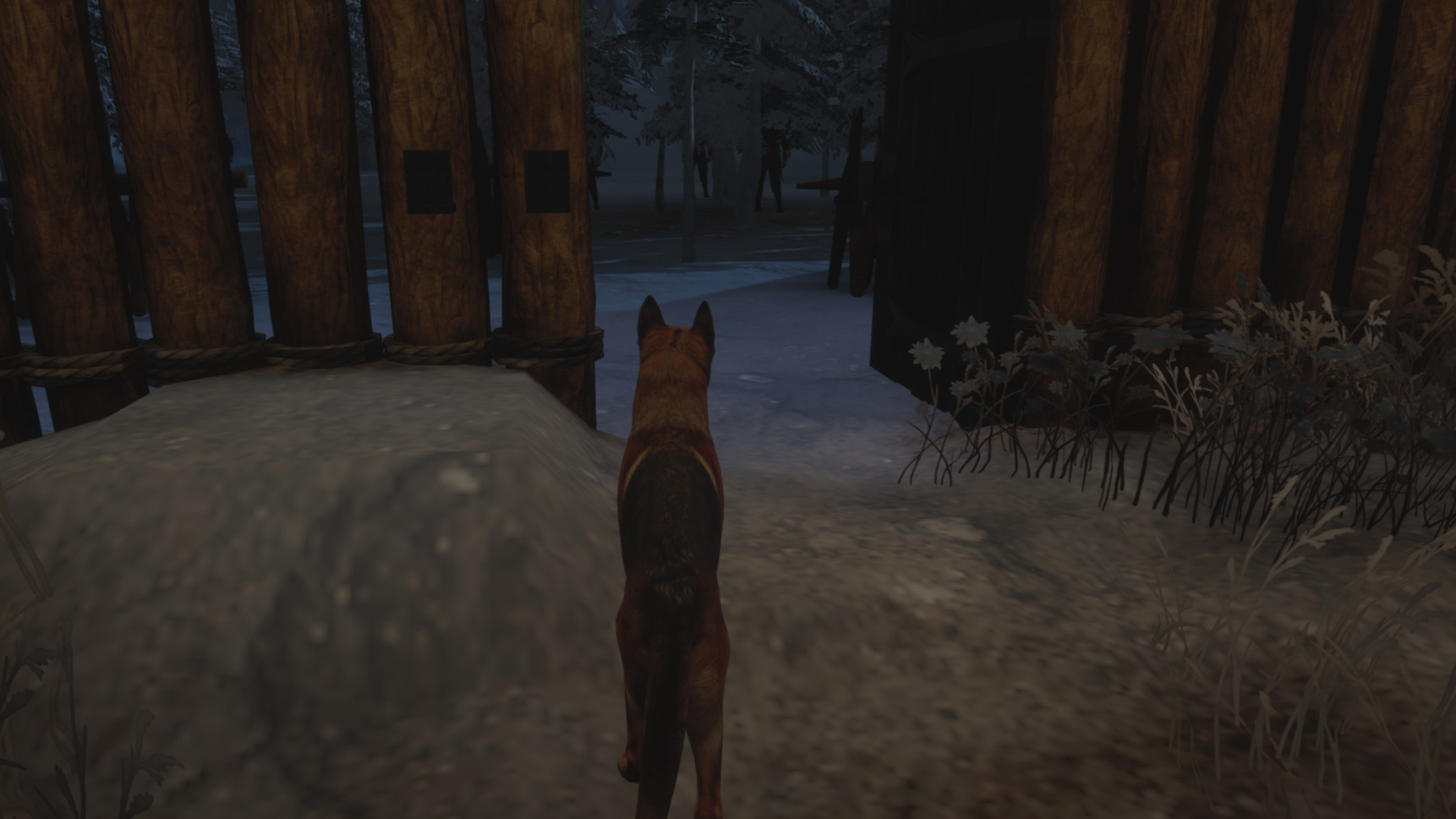
3. Push the bar to open the side gate for your handler.
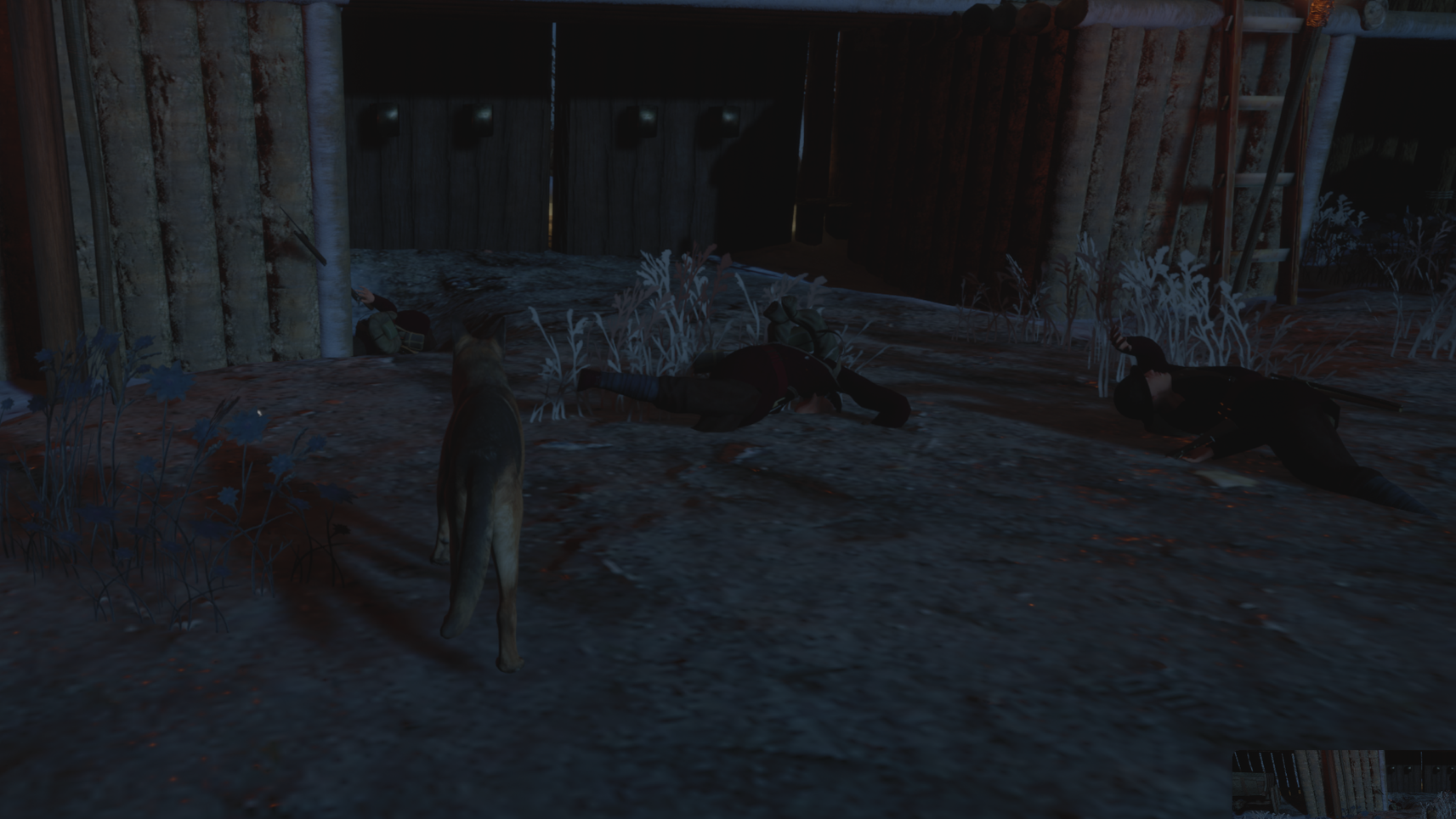
5. Eliminate the guards with your handler.
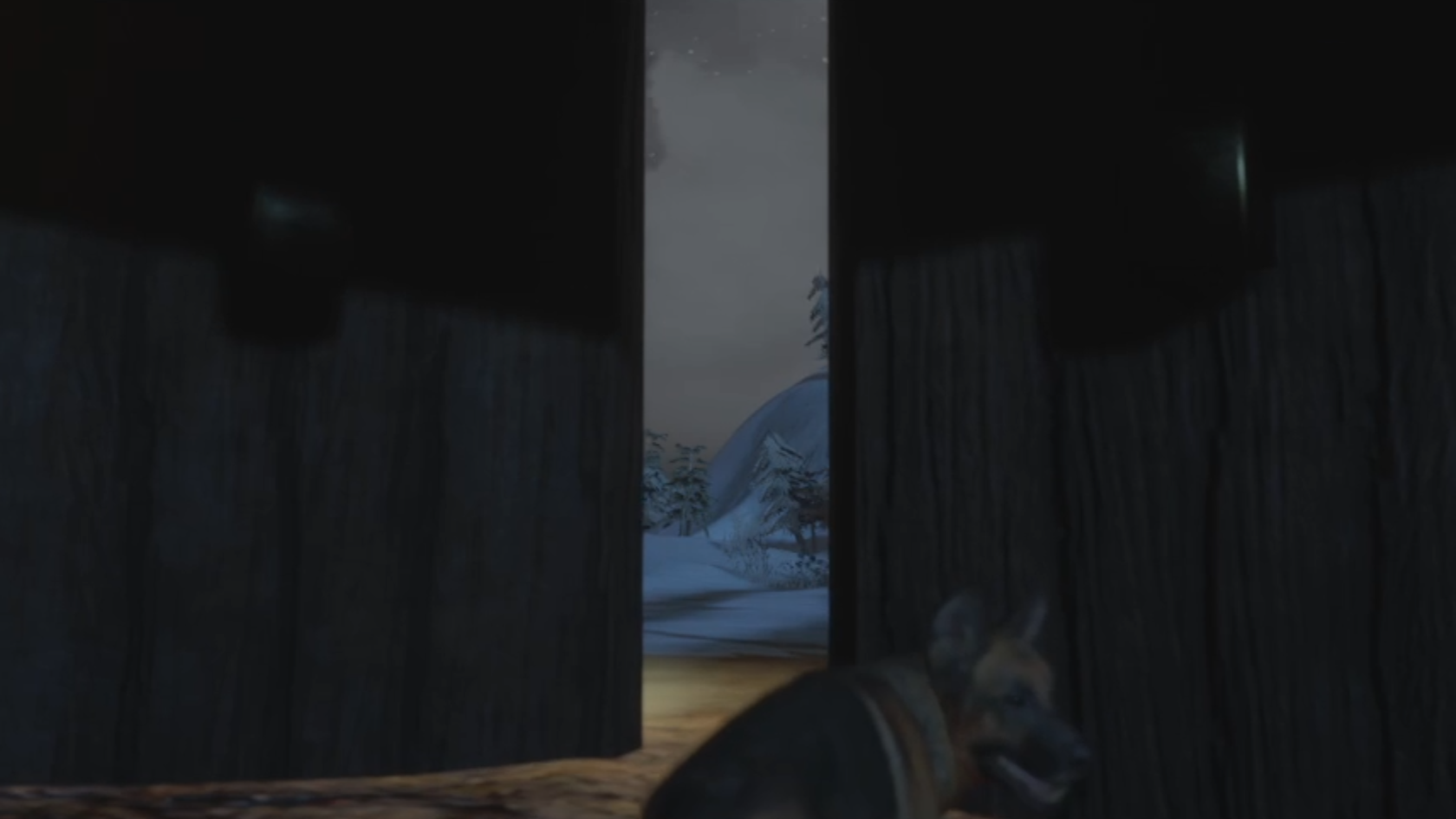
6. Together open the gate for the rest of your army.
Level Design
From the starting point, the player can always see their next objective. I use elevation placing goals on hills or below the player’s position and highlighting them with lighting to make navigation intuitive. Elevation also helps the environment feel more organic and visually interesting.
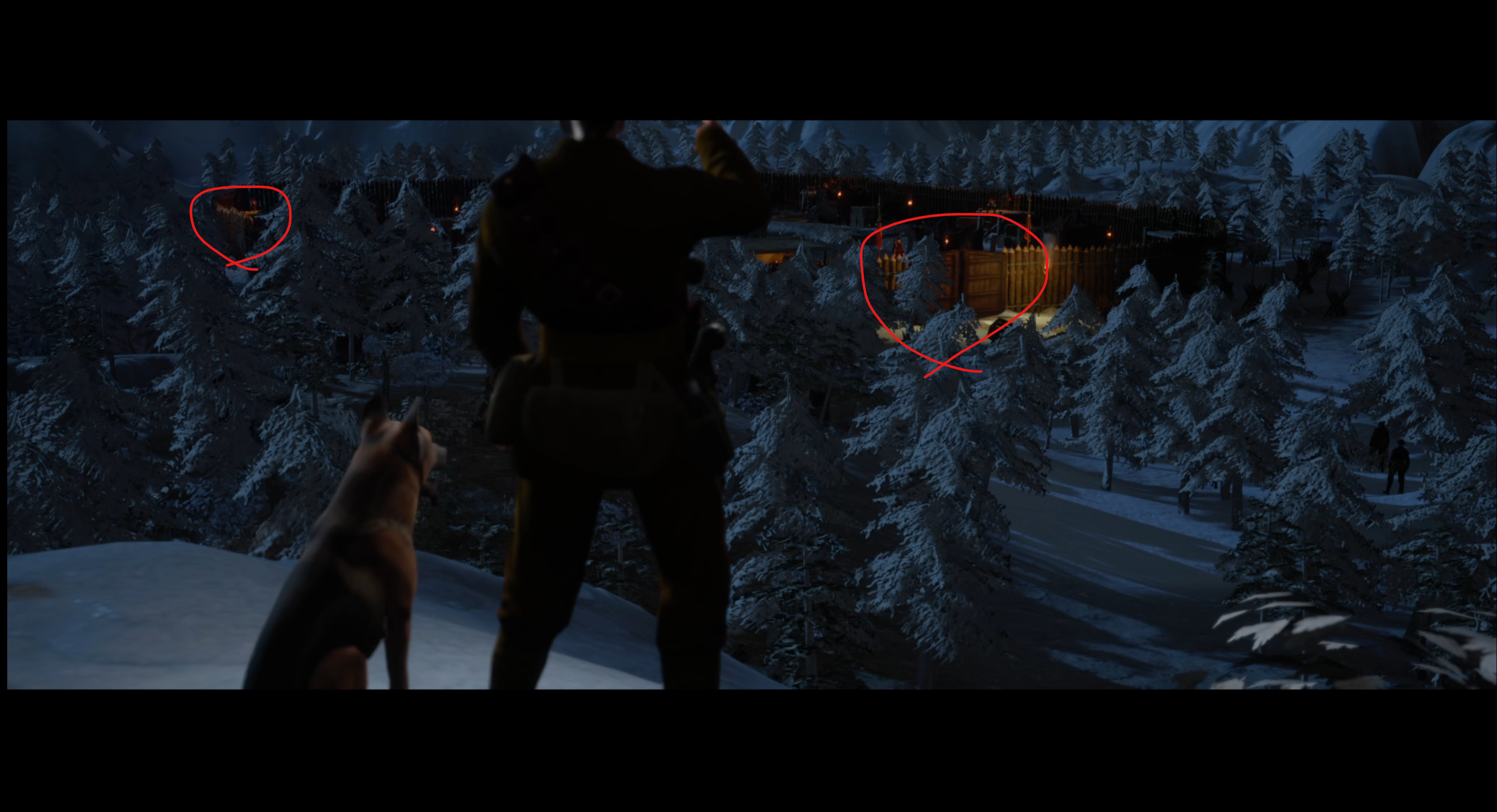
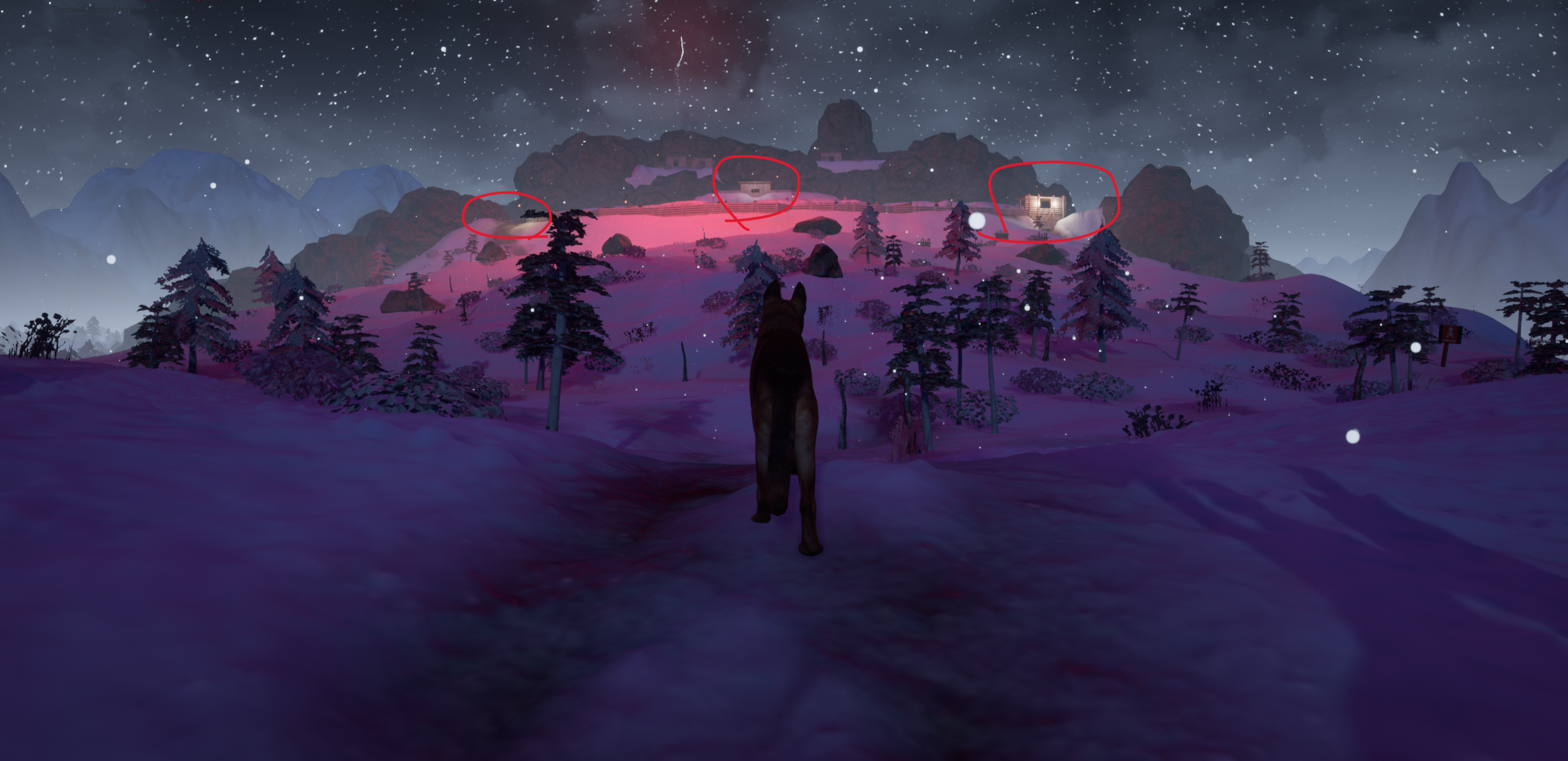
Each camp can be approached in multiple ways, giving the player freedom to choose their own path.
Enemy patrols were added to bring more life and tension to the level. Their movement encourages players to observe patterns, wait for the right moment to advance, and plan their actions strategically.
To avoid monotony, I broke up long straight paths with turns and elevation changes. This not only makes the level feel more natural but also gives players multiple ways to approach challenges and creates dynamic, player driven situations even though all paths ultimately lead toward the same objective
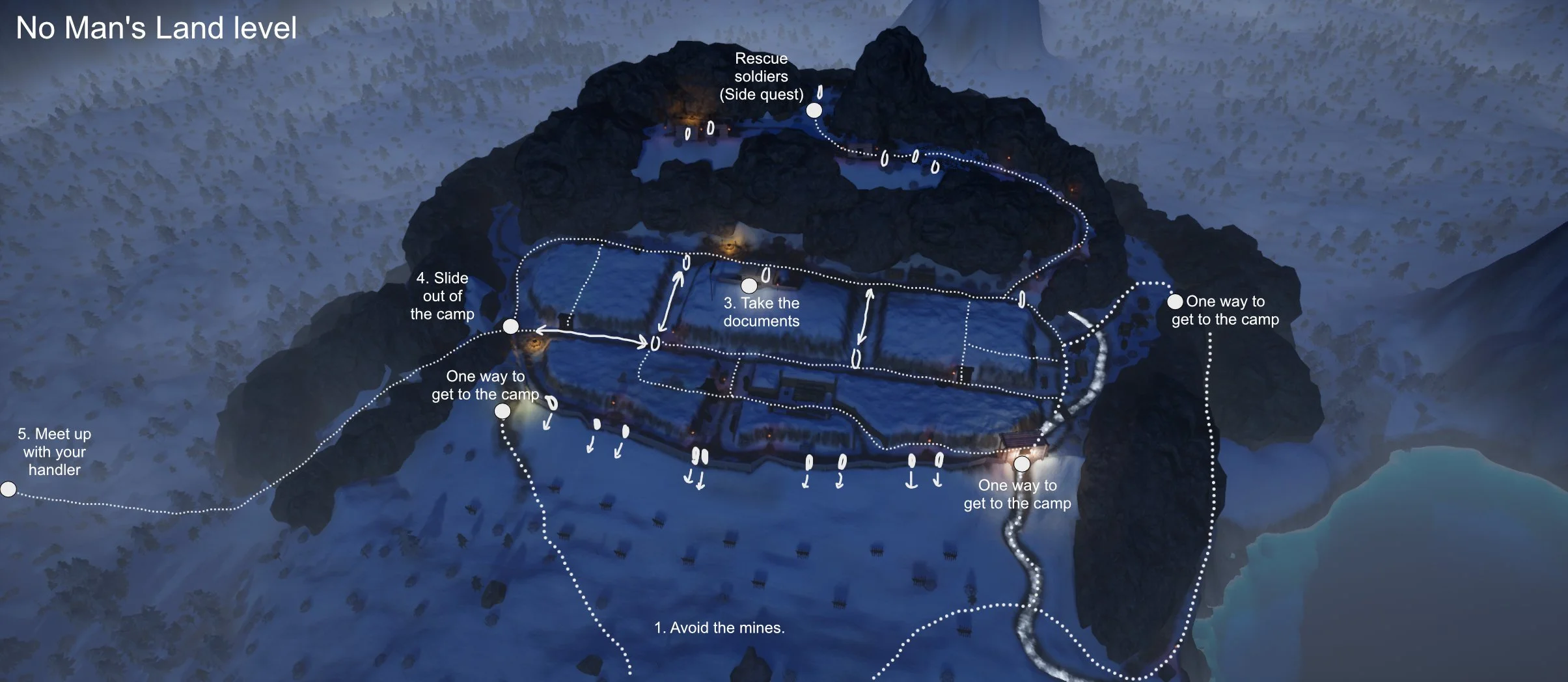
At the beginning, the player must cross the no man’s land, an exposed area where enemies can easily spot you. This forces the player to stay alert, pay attention to their surroundings, and navigate carefully due to the presence of mines. No Man’s Land is intentionally unsettling, reflecting the devastation of war and grounding the player in the harsh reality of the world. It also serves as a challenge before reaching the enemy camp, where the gameplay shifts.
Pre-production
Sketches and blockout
To create the layouts for the two levels, I began with a rough sketch outlining the main areas, working on one level at a time.
I then created a more refined top-down layout, which served as the template for the initial blockout.
From there, I continued iterating on the level blockout, refining the layout and adjusting key areas.
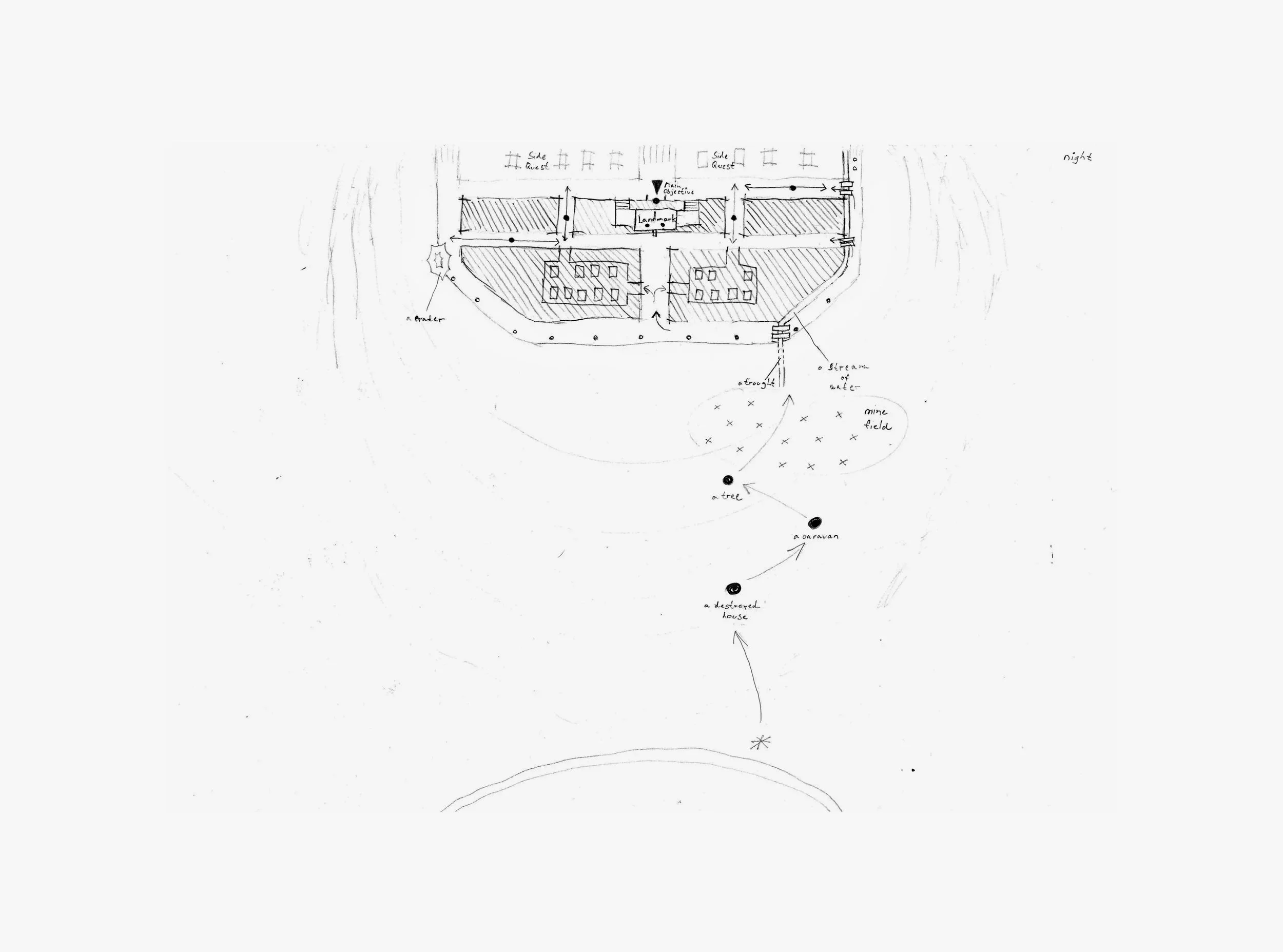
Initial sketch of No Man's Land level v1
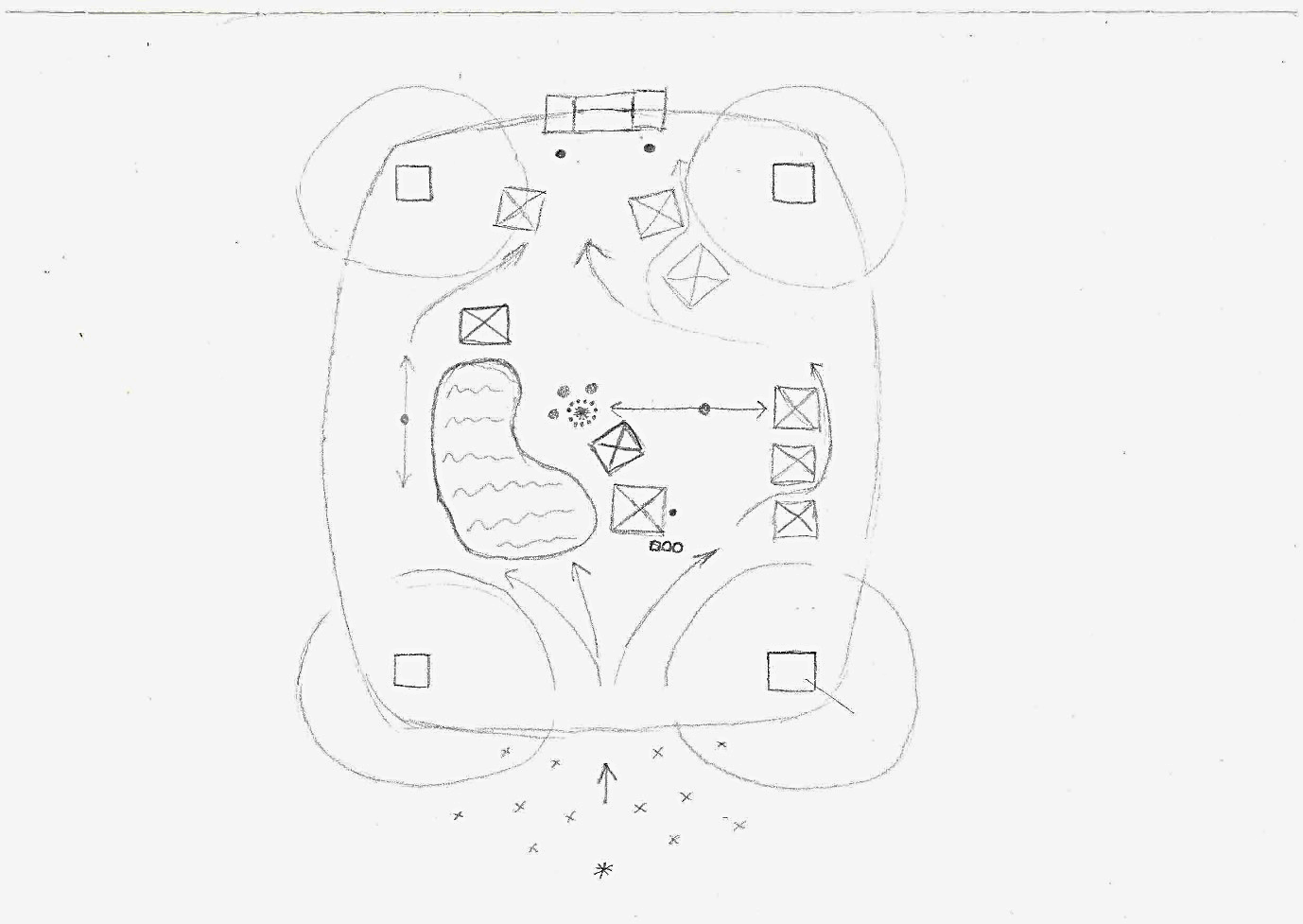
Initial sketch of Enemy Camp level v1
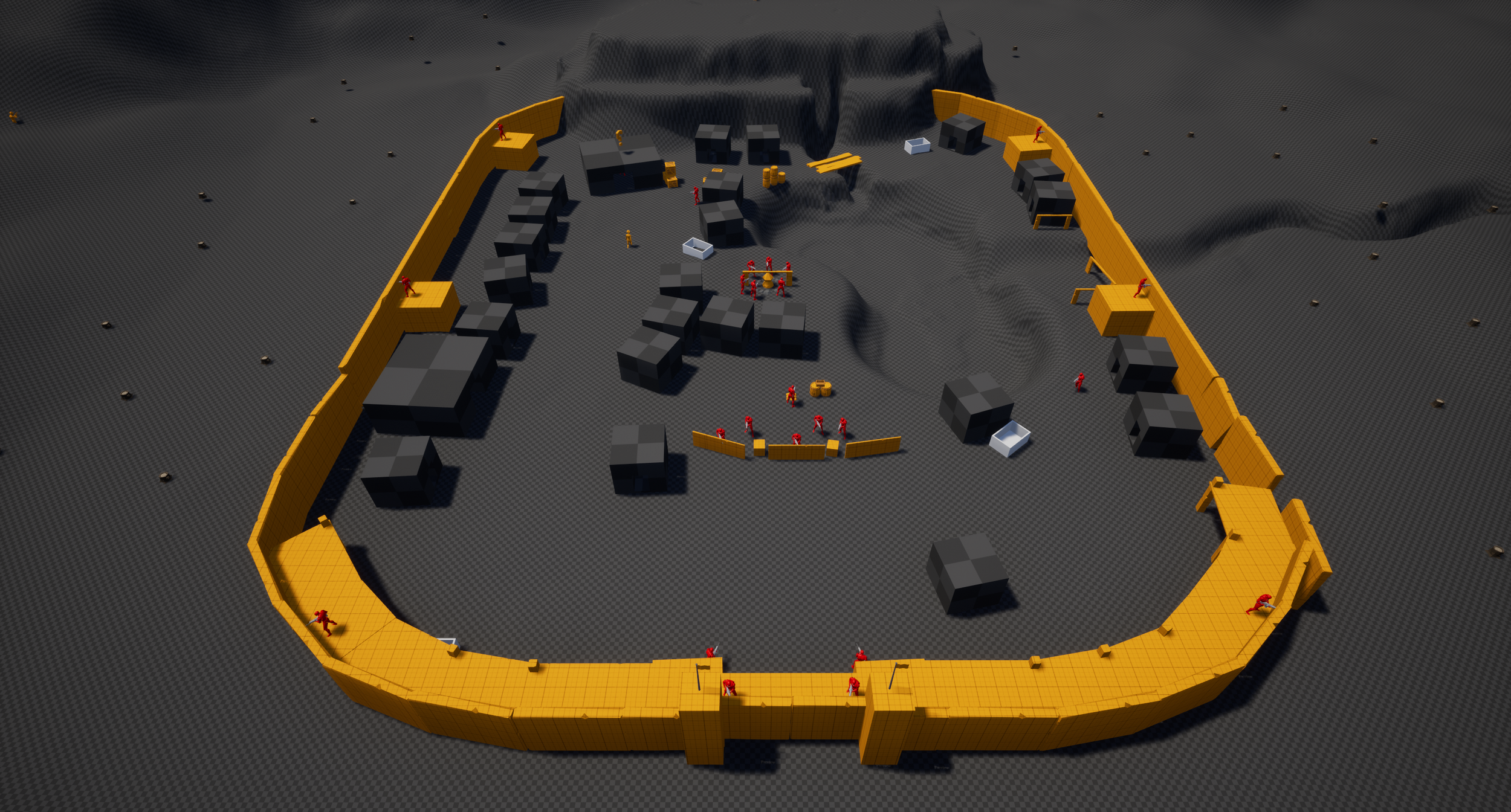
Initial blockout of the Enemy Camp level design.
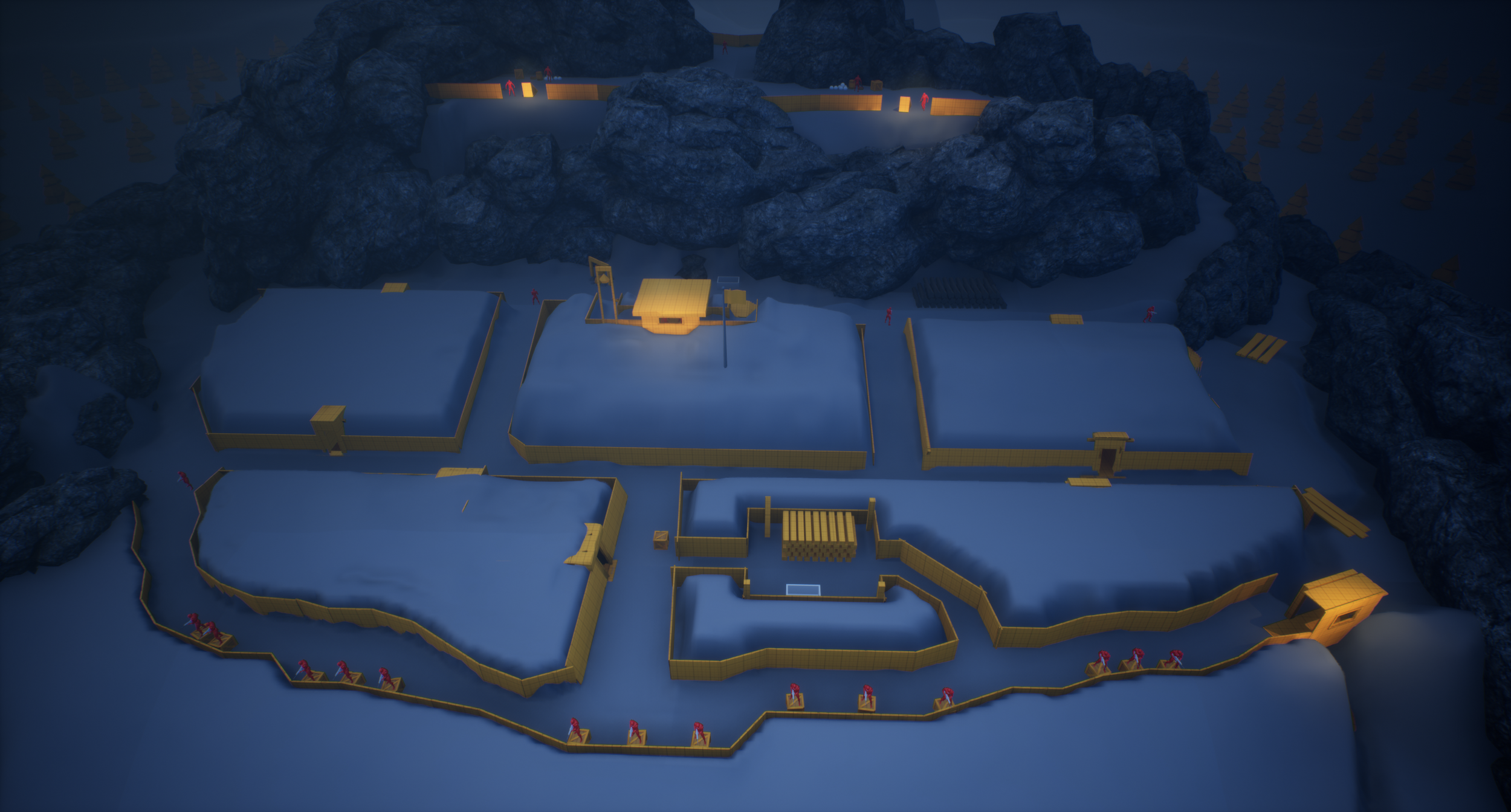
Initial blockout of the No Man’s Land level design.
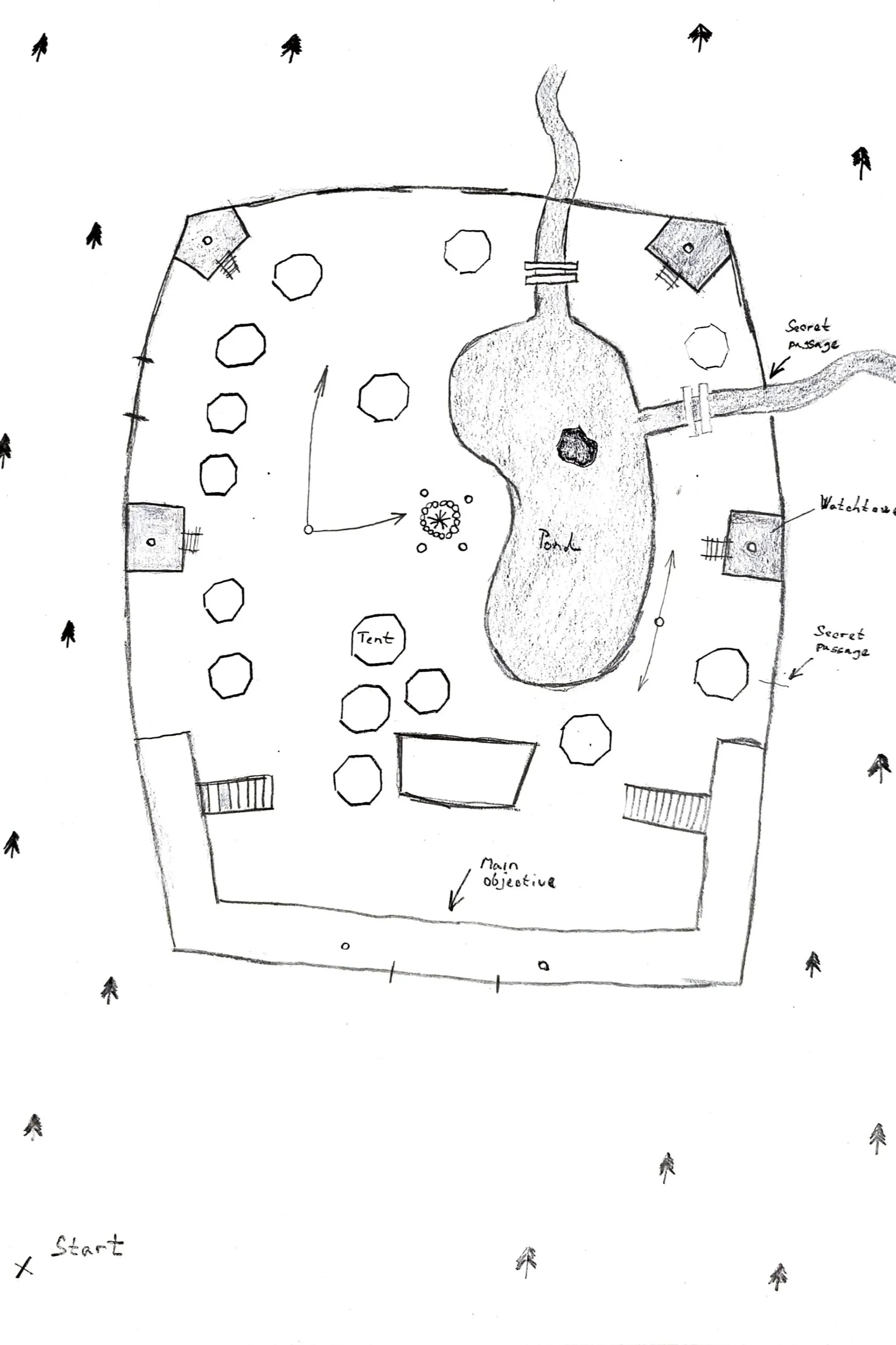
Sketch of No Man's Land level v2
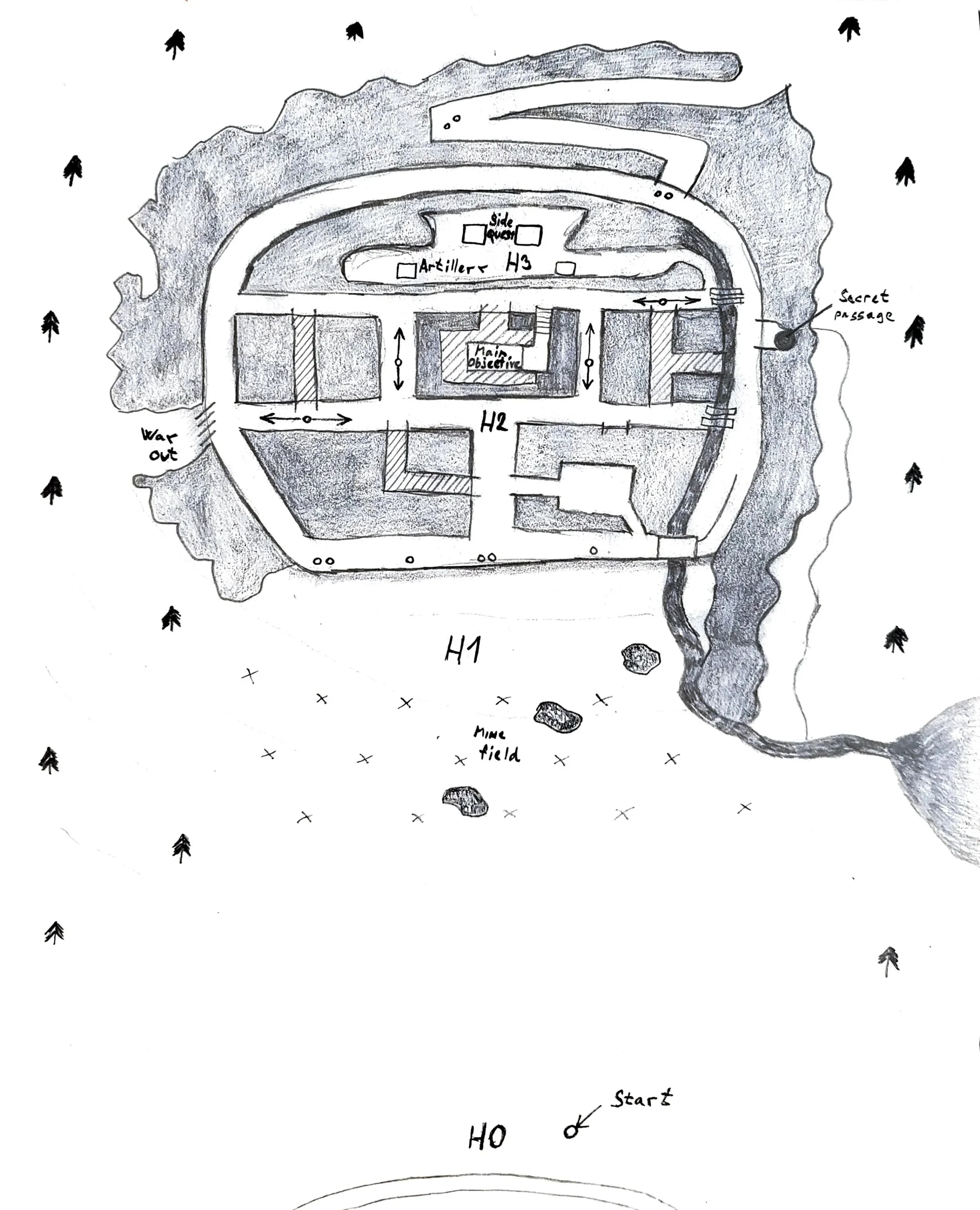
Sketch of No Man's Land level v2
Metrics
I also established clear minimum and maximum obstacle dimensions that the player character can realistically overcome. These metrics guide how I place objects in the environment, ensuring movement feels consistent and believable.
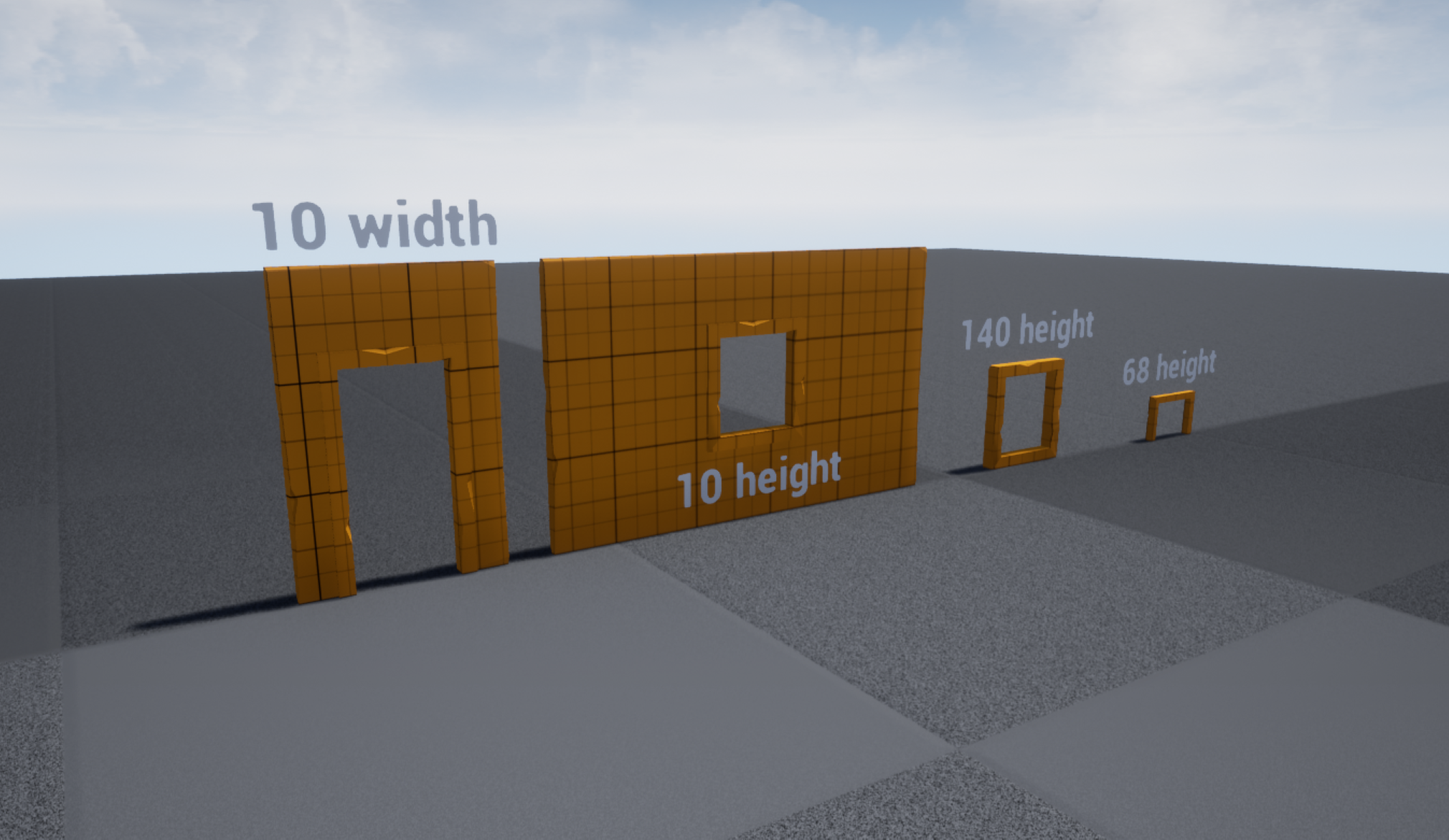
References
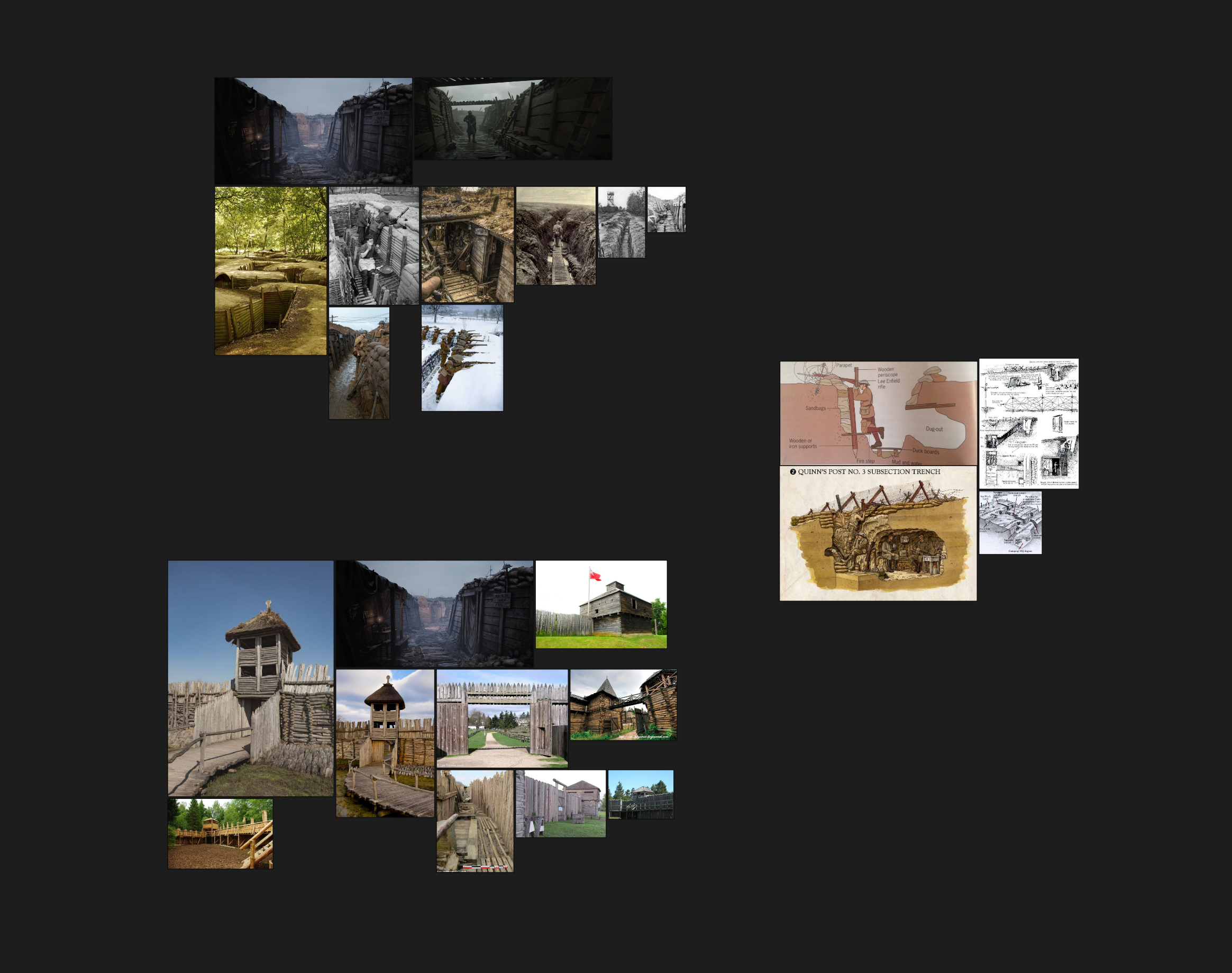
One of the first steps in creating the level was gathering a wide range of references.
I looked at everything from trenches and old fortresses to games that explored a similar theme.
These references helped shape the layout and served as architectural guidelines, helping the space feel believable and grounded in reality.
Reflection
Designing from a dog’s perspective led us to mechanics that felt natural and distinctive—crawling through tight spaces, luring enemies, detecting mines, and opening door bars inside enemy camps. These abilities shaped both the layout and the overall flow of the level.
We chose a realistic visual style to support the wartime setting, which introduced performance challenges, so I focused on optimising lighting and textures to keep the atmosphere intact while maintaining stability.
Weekly playtests, along with feedback from both the team and external testers, highlighted unclear navigation, difficulty spikes, and pacing issues. This allowed us to refine layouts, adjust enemy behaviour, and improve the overall flow. Continuous testing helped each revision move the level toward a more intuitive, engaging, and polished final design
Credits
Adam Parker – Programmer, Animator
Shalini Dutta – Level Design, Narrative, Cinematics
Ellie Marden – UX designer, Game designer
Oliver Ghalleb – UI Designer, Sound Designer