Hlína - Adventure
Level design,
Game design,
Scripting
Narrative
Art
Lighting
Gameplay
The game takes place in a small town where the factory is the only source of income, trapping the main character. It’s a management game in which the player earns money by completing production quotas at the factory.
Outside of work, the focus shifts to the character’s personal struggle. He faces a constant dilemma: whether to spend his limited income supporting his mother and buying essentials, or to cope with the pressure and monotony of factory life by having fun at the local pub. The gameplay revolves around balancing survival, responsibility, and self-destruction within an environment that offers very few alternatives.
Summery
This project took us 2.5 years, during which I wanted to take a game from a rough idea to a fully playable, polished experience ready to ship on Steam.
For the level design, my main focus was on creating a space that could tell its own story. I aimed to convey narrative rather than rely solely on dialogue or text.
I worked closely with Adam Parker and Alexander Vakhitov throughout development. We shared feedback and iterated on ideas.
Breakdown
Unreal Engine 5
Maya
Trello
Unity DevOps
Miro
Responsibility
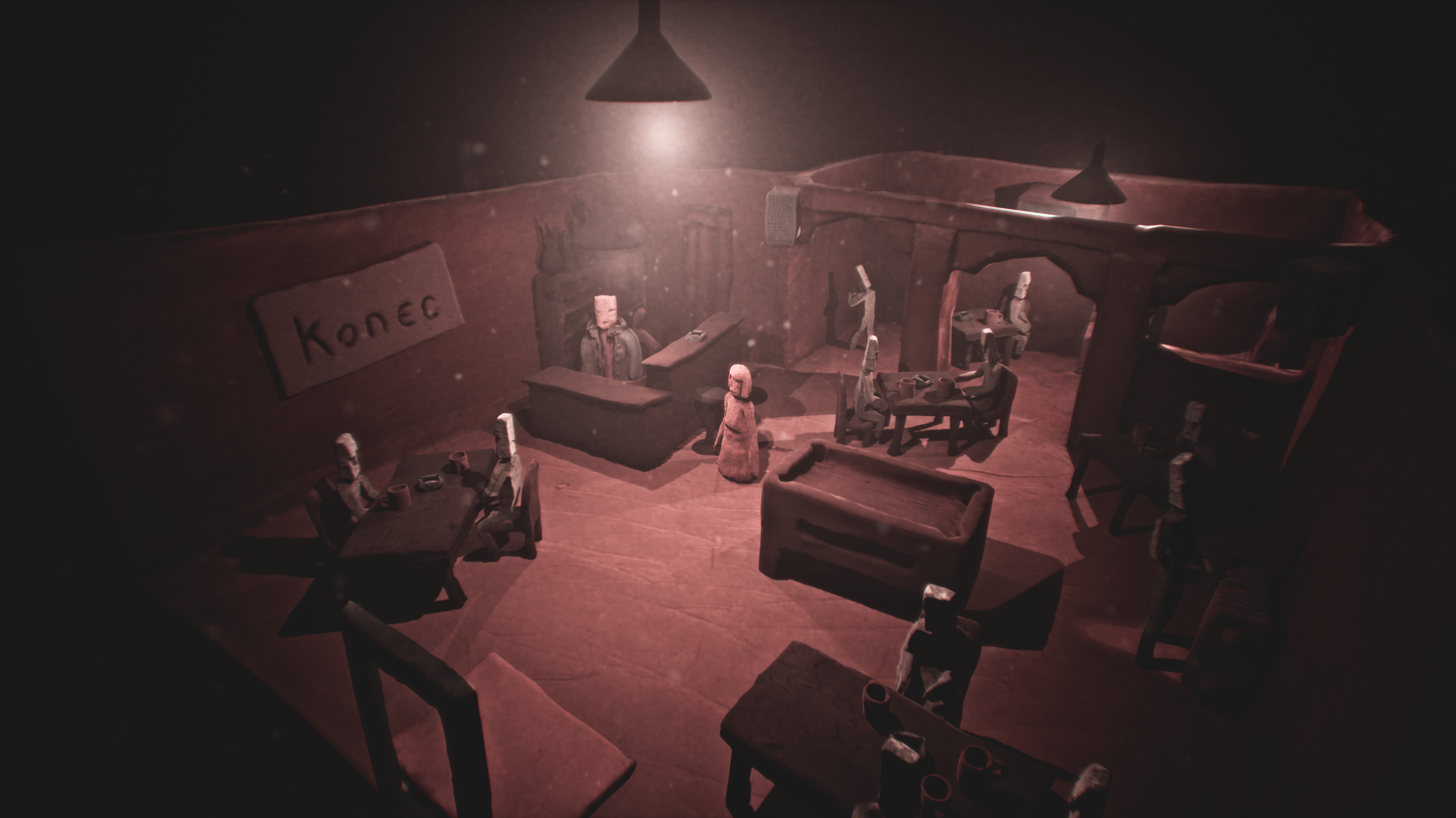
Pub
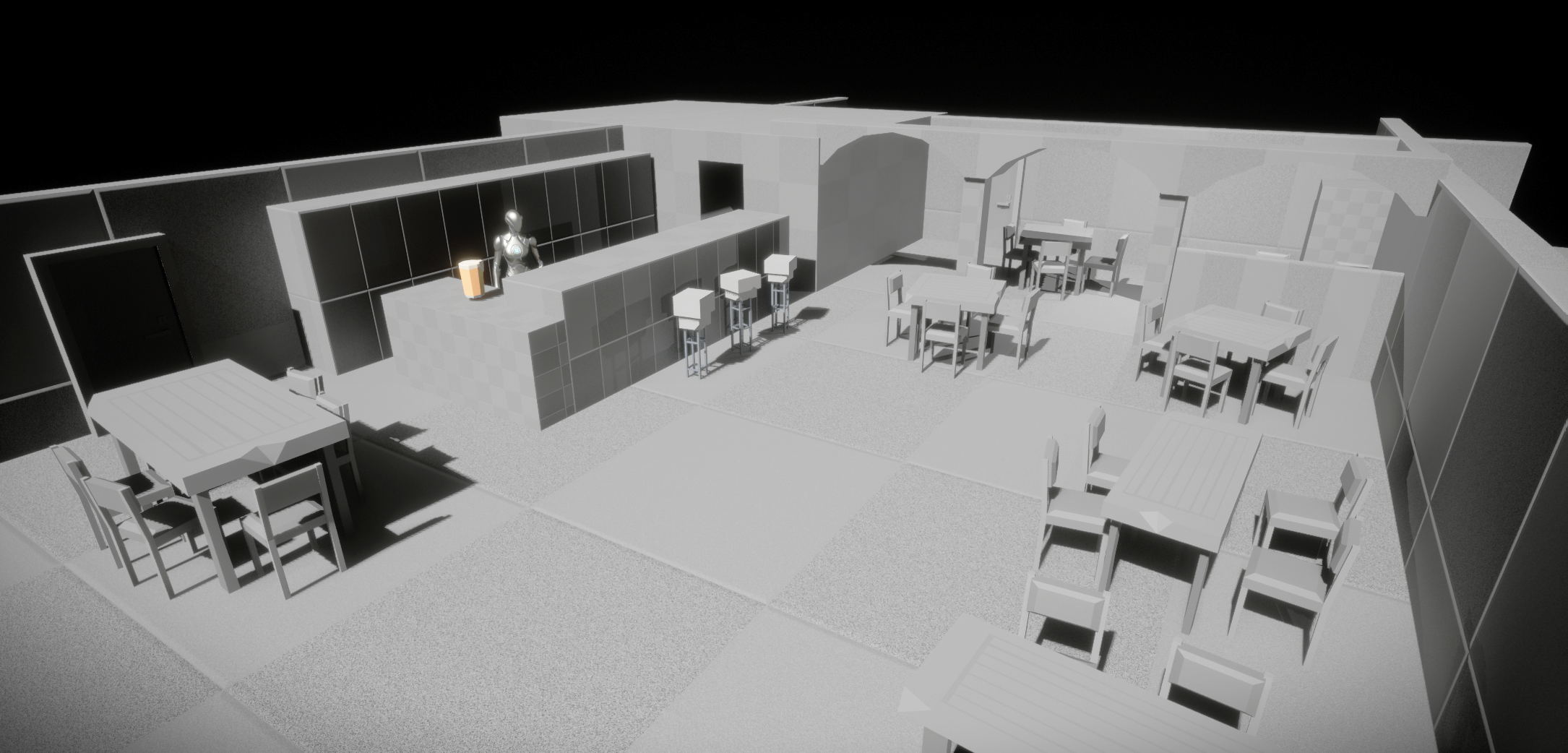
Blockout of pub
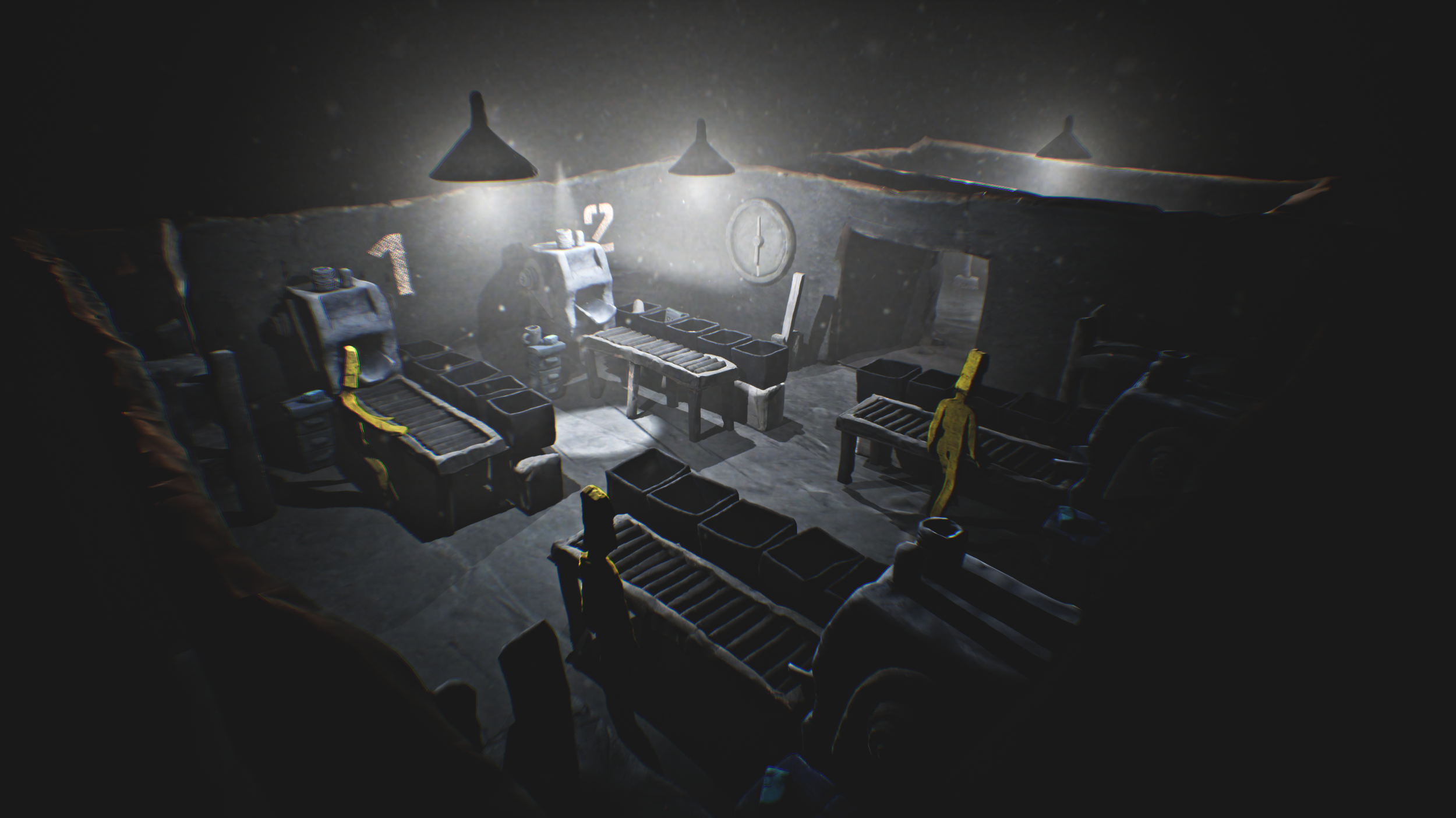
Factory
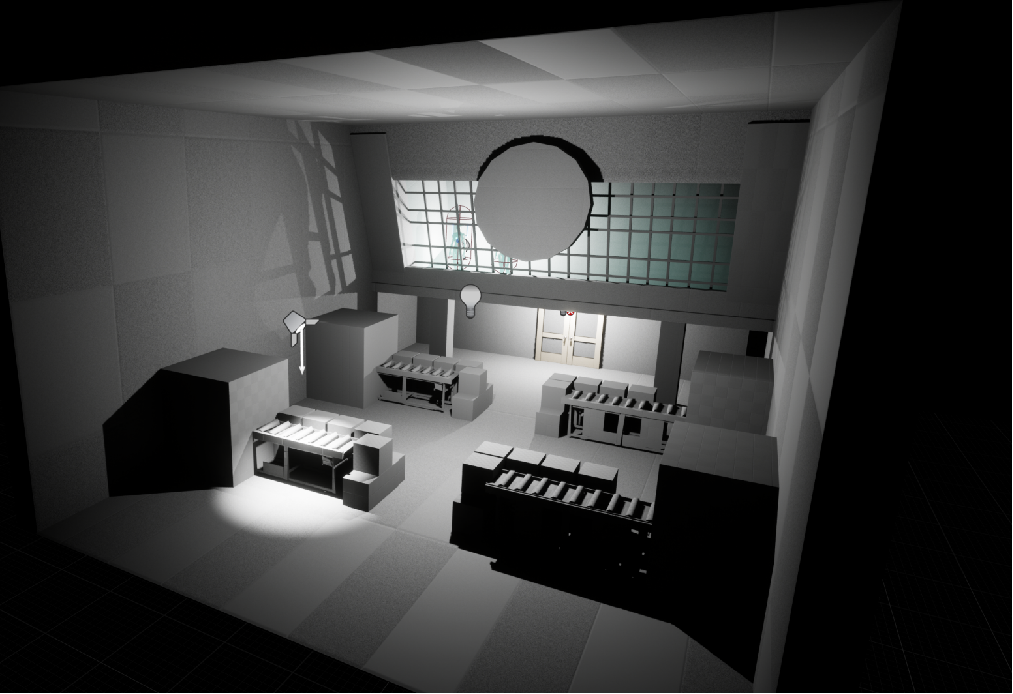
Blockout of factory
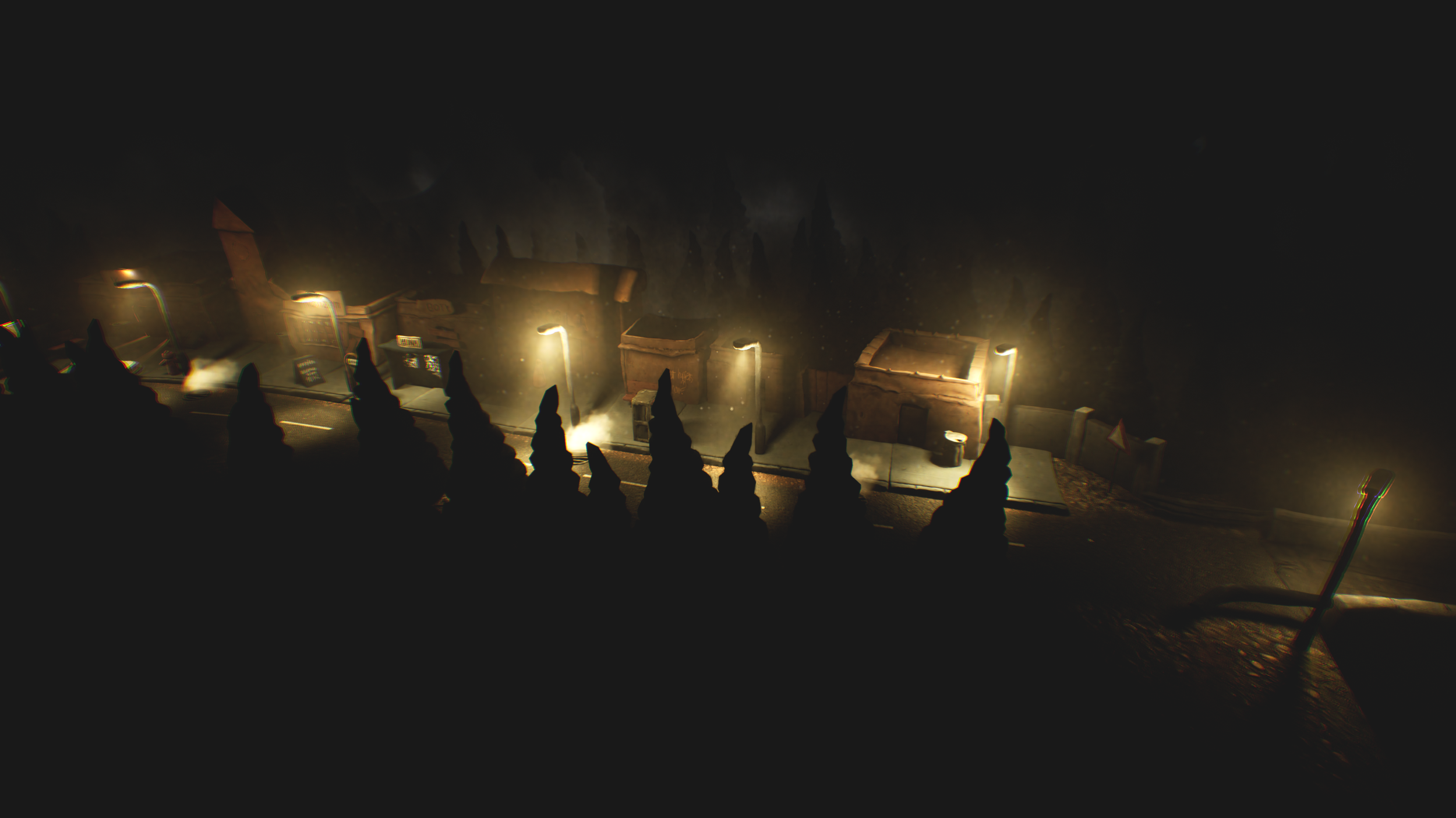
Town
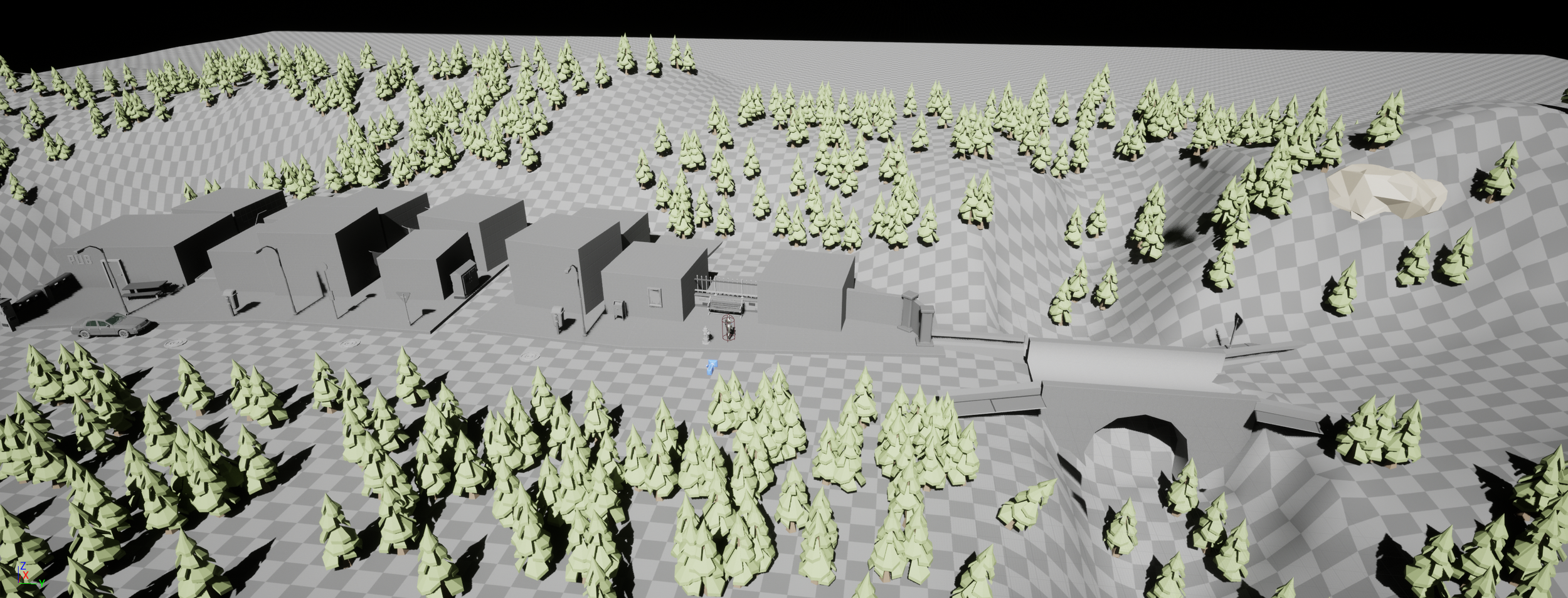
Blockout of town

Managment

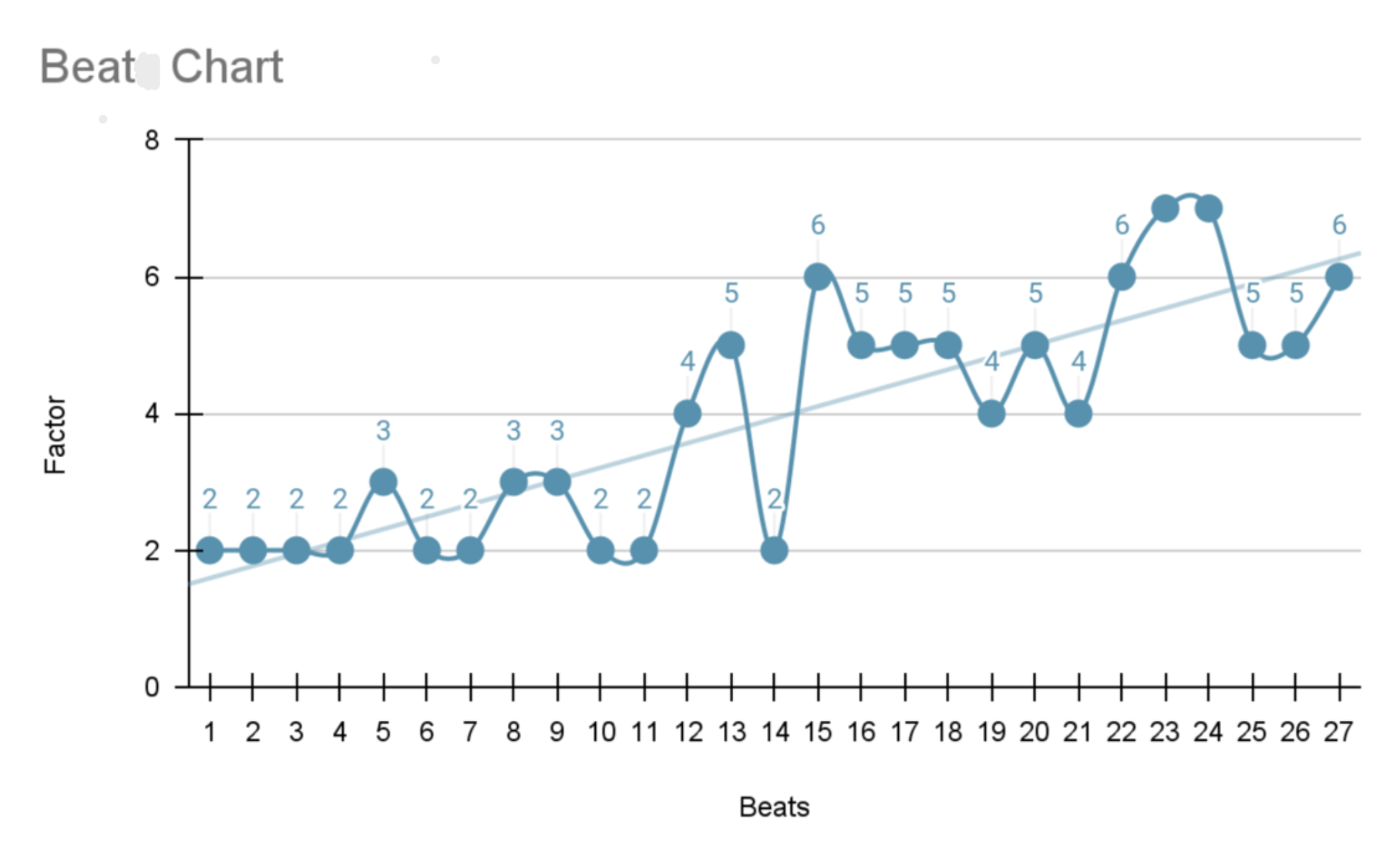
Flowchart
Reflection
I wanted the controls to feel simple and intuitive, so players would immediately understand what to do without a traditional tutorial. Through continuous playtesting, I refined the controls and relied on level layout, lighting, camera framing, and leading lines to guide the player naturally.
We organized closed public playtests and gathered feedback. Players felt the game was short, lacked depth, and was too simple and repetitive. The drinking minigame also wasn’t well received, so we added more activities and interactive elements to encourage exploration and make the experience richer, and we completely reworked the drinking minigame. Over time, the game evolved to offer greater depth through more varied scenarios and expanded social interactions.
We also iterated on the levels themselves, mainly addressing issues where the camera blocked the player’s view. Since each level used a different camera setup, we focused on making the camera more dynamic while maintaining clarity and readability.
Throughout development, we communicated openly and addressed concerns on a weekly basis. Although the project took 2.5 years alongside my full-time job, we stayed to meet the release deadline while keeping the core experience polished. In the end, we successfully released the game on Steam, where we have received decent reviews.
Credits
Programming
Adam Parker
Composer
Alexander Vakhitov